Some deliveries may take a little longer than usual due to regional shipping conditions.

DOWNLOAD THE APP


Customer Services
Copyright © 2025 Desertcart Holdings Limited
DOWNLOAD THE APP
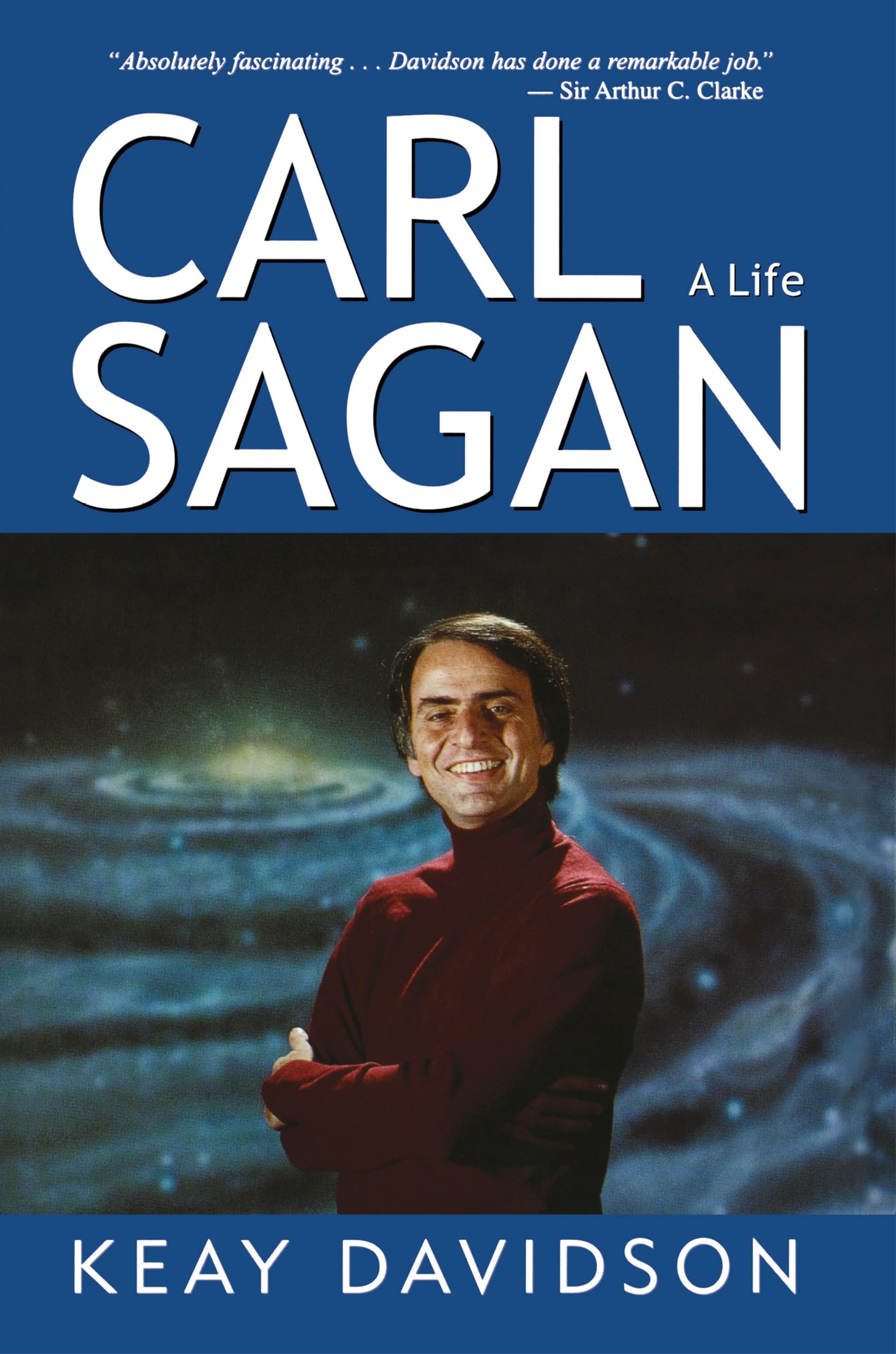
Carl Sagan: A Life [Davidson, Keay] on desertcart.com. *FREE* shipping on qualifying offers. Carl Sagan: A Life Review: Wonderful book - It's well-written, has just enough facts (but not too many), and suits my research purposes. I would recommend reading it. Review: I would give 4.5 - Sometimes Davidson comes off as too sympathetic to postmodernism, as if he has friends in that camp he must satisfy. Otherwise, this book is fantastic reading and made me understand Sagan as a man not as the demigod he became.
| ASIN | 0471395366 |
| Best Sellers Rank | #1,209,462 in Books ( See Top 100 in Books ) #1,451 in Scientist Biographies #6,882 in United States Biographies |
| Customer Reviews | 4.1 4.1 out of 5 stars (82) |
| Dimensions | 6.13 x 1.31 x 9.25 inches |
| Edition | 1st |
| ISBN-10 | 9780471395362 |
| ISBN-13 | 978-0471395362 |
| Item Weight | 1.75 pounds |
| Language | English |
| Print length | 580 pages |
| Publication date | September 1, 2000 |
| Publisher | Trade Paper Press |
V**Y
Wonderful book
It's well-written, has just enough facts (but not too many), and suits my research purposes. I would recommend reading it.
D**Y
I would give 4.5
Sometimes Davidson comes off as too sympathetic to postmodernism, as if he has friends in that camp he must satisfy. Otherwise, this book is fantastic reading and made me understand Sagan as a man not as the demigod he became.
D**N
Mixed
I have mixed feelings about this book. On one hand, this book is very well written and very interesting. It kept my interest from start to finish and was hard to put down. The detailed anecdotes and thoughts of Sagan's friends, colleagues and family members make for very interesting reading. I also came away with an enhanced respect for Sagan as a scientist. On the other hand, I think Davidson goes to far injecting his personal anti-science opinions and in tearing down Sagan's books. For instance, Davidson goes on a tirade trashing "Dragons of Eden", which was a magnificent achievement. I think there was some jealousy of Sagan among scientific circles, since it was Sagan who got all the attention. Maybe Davidson is a little jealous of Sagan's mega-success too. Despite this, I do feel the book is worth reading.
D**N
No one quite like him today
Carl Sagan was a hero of mine when I was younger not because of physical bravery but because he opened up for me the mystery and wonder of space. I had heard since then that his personal life was a different story. This well-written book presents both sides of the man – the inspirational and the flawed. Like many famous people in history, Sagan had what is sometimes called “feet of clay,” But his limitations and failures don’t take away from what Sagan could do incredibly well – present science, especially astronomy, to the general public in a way that was clear, eloquent and filled with insight about our place in the universe. What’s especially interesting about Davidson’s biography is its even-handedness. Most biographers are at least broadly sympathetic to their subjects and mention but don’t overplay the subject’s failures. But Davidson lays on Sagan’s failures “full bore.” He pulls no punches about Sagan’s ego, his narcissism as he became more famous, and his neglect and sometimes harm he caused in human relationships. Some critics view this biography as a book-length putdown of Sagan. But that is not the case. In many other places Davidson spells out in great detail Sagan’s love of science, his dedication to finding truth over human illusions, his superb teaching skill, and his eloquence about science that inspired millions. It’s rare to have a book that is so incredibly blunt and strong about both a subject’s strengths and weaknesses. I found this extreme honesty about Sagan refreshing and, if the man behind Cosmos and Contact had some major failings, for me it pointed more clearly toward what Sagan could do positively. This is a complete picture of the man. If the book has any weaknesses, it is Davidson’s tendency in places to rhapsodize over his own thoughts on space and history, There are times when I said to myself, “That’s great, Mr. Davidson, now let’s get back to the biography.” But this is a small point in an otherwise excellent biography. The media has some very good popularizers of science today including Ann Druyan, the person who was Sagan's real love and who grounded him in personal relationships. Druyan continues to work with the media to present science in a way that the public can comprehend. The new Cosmos series is well done (another one supposed to be coming soon). But, simply in terms of rhetorical ability, no one has Sagan’s combination of eloquence, clarity and ability to inspire. Sagan was a flawed human being but, in terms of the level of scientific literacy in society, how much we miss him!
A**R
Excellent biography of Sagan, warts and all
I was very impressed by this biography by Carl Sagan which introduces the man with all his strengths and flaws. Davidson brings a gripping eloquence to his writing that sometimes mirror's Sagan's own writing. He covers all phases of Sagan's life and showcases his achievements, failures and private side with scores of quotes from friends, family members and Sagan himself. Davidson documents Sagan's childhood and chronicles the personalities of his father and mother. His mother with her acid tongue was especially to play an important role in his life. Sagan was clearly born to do science but was also a very wide-ranging intellect, a true Renaissance man who was as passionate about literature, politics and philosophy as he was about science. He was a very good scientist, even if not among the very front ranks of the scientists of his generation. His real strengths lay in writing, speaking and communicating his passion for science and the human race and he ended up being arguably the greatest science communicator of the twentieth century through his books and TV appearances. Davidson has much to say about Sagan's science including his contributions to planetary science. Sagan also made important contributions to speculative topics (SETI) and topics of great importance to the public (nuclear winter). Davidson also has plenty of anecdotes about Sagan's friends and colleagues. But the biography is really a personal one that illustrates Sagan's triumphs and failings. Sagan was deeply concerned about the future of humanity, especially in the face of nuclear war which he publicly opposed. He was also an almost perfect combination of skepticism and wonder, both of which he relentlessly expounded on throughout his life. But like many others concerned about humanity at large, he was often a failure on the family front. He had three marriages, only the last of which brought him true peace and happiness. He was often an absentee father, especially to his first son, and could be vain and self-centered. But in the end his talents as a science communicator and passionate proponent of rationalism and humanity endeared him even to his enemies. As Davidson explains, even those with whom he had a falling out evidenced sadness more than anger or relief after he passed away. More than any other person Sagan brought the cosmos and wonders of science to our living room and that remains his greatest accomplishment. In this volume Davidson tells us about the character which helped him accomplish what he did. Highly readable.
K**S
interesting insights
Interesting insights into a rich and full life.
M**S
Out of this world
J**R
As early as the third page (Preface p.viii), Keay Davidson cautions his readers of the dangers of 'scrutinizing Sagan's life in detail'. Fortunately, like Davidson, I found myself liking and respecting Carl Sagan more at the end of this book rather than less but sadly, the same cannot be said of my feelings for the author. The problem with this biography is that it is little more than a salacious exposé of Sagan's oft-cited character flaws rather than a balanced account of his life and (significant) achievements. Davidson paints Sagan as a social and professional climber who, in the gratuitous pursuit of celebrity, allowed his ambition to sour marriages, professional collaborations, and friendships alike. As evidence of the 'serious flaws' involving his personal relationships (p.viii), Davidson cites Sagan's three marriages and throughout the book, holds Sagan unilaterally responsible for the breakdown of the first two. Conversely, Davidson's treatment of Lynn Margulis (Sagan's first wife) is far less judgemental despite her being divorced exactly the same number of times as her first husband (p.394)! This lack of even-handedness pervades Davidson's work; for instance, whilst he is content to infer that Sagan's ambition was a corrosive vice, Margulis' professional aspirations are characterised as enviable virtues (p.71). The biographer even lampoons his subject's curriculum vitae (p.383), seemingly dismissive of Sagan's contributions to over six-hundred scientific papers, twenty popular science books, a novel, a major television series, and a Hollywood film. Doubtless there were some trivial entries in Sagan's resume, but is that not true of most CV? Clearly, it is entirely reasonable for a biographer to make judgements and form opinions about his subject and it is obvious that Davidson had extensive access to people that were close to Sagan. Undoubtedly, Keay Davidson's judgement of Carl Sagan is better informed than my own, but it seems to me that, by focussing on Sagan's shortcomings rather than his prodigious achievements, Davidson misses an opportunity to celebrate Sagan's contribution to science and society.
D**L
I have never been one to see my heroes as Whiter-than-white. And in any good, balanced biography there is always going to be many "man behind the mask" revelations. Unfortunately, I cannot reasonably call this a "balanced" biography. "Unintended Hatchet Job" may be more of an apt description. Page after page I look forward to reading Sagan's accomplishments, his successes and positive traits. Yet page after page we are treated to criticism after criticism (by those interviewed rather than the author I must add) to effect that with a dull weariness you know that is probably coming next. Even his family do not escape - Was there any reason to waste a paragraph describing an incident between Sagan's mother and Isaac Asimov for example? The author has certainly done a huge amount of research and really got under the skin of his subject. Its just a shame he is likely to get under the reader's skin too. A point in question is that the continual finger pointing that Sagan was more of a showman than scientist. Well, yes, he was a great showman, and no doubt there were better scientists. But please, shouldn't Sagan's showmanship be celebrated? He brought Science to the masses. How he did that is the biography I want to read.
G**N
HEAVY READING AT TIMES
Trustpilot
3 weeks ago
2 months ago