We remain fully operational. Our teams are working around the clock to ensure your deliveries continue safely.

DOWNLOAD THE APP


Customer Services
Copyright © 2025 Desertcart Holdings Limited
DOWNLOAD THE APP

Give and Take: Why Helping Others Drives Our Success [Adam Grant] on desertcart.com. *FREE* shipping on qualifying offers. Give and Take: Why Helping Others Drives Our Success Review: How to succeed by being a giver who does it right - In the opening pages of Give and Take: Why Helping Others Drives Our Success, Adam Grant says: “Every time we interact with another person at work, we have a choice to make: do we try to claim as much value as we can, or contribute value without worrying about what we receive in return?” Then Grant defines three characteristic ways of dealing with that choice. “Takers” try to get as much value as they can. They want to come out on top. They want to win. “Givers” are their polar opposite. Givers try to give as much as they can without worrying about what they get back. According to Grant, both of those styles are rare and at opposite ends of a continuum. In the middle are what he calls “Matchers.” Matchers worry about a fair exchange. They’re willing to help others, but they also try to protect themselves, and many of their transactions come out even. Which type is most likely to succeed? Here’s Grant: “Across occupations, it appears that givers are just too caring, too trusting, and too willing to sacrifice their own interests for the benefit of others. There’s even evidence that compared with takers, on average, givers earn 14 percent less money, have twice the risk of becoming victims of crimes, and are judged as 22 percent less powerful and dominant.” Wow. I’ve always thought of myself as a giver. My instinct is to say “Yes” when somebody asks me for something, without worrying too much about what’s in it for me. In fact, one of the hardest things I had to learn during my lifetime was that if I wanted to be successful, I needed to say “No” a lot more. I’ve been taken advantage of many times in my life because of that giving nature. I figured that was okay, though, because I couldn’t see myself really acting like either a taker or a matcher. Grant’s statement made me stop and think. The bottom of the pile? I had to stop reading for a while and process what I read. It took a while and a bunch of soul searching, but I finally realized that I was okay with that. If that had to be the cost, then that was the cost. Besides, I thought I’d done pretty well in my life. When I returned to the book, here’s the next thing I read. “So if givers are most likely to land at the bottom of the success ladder, who’s at the top—takers or matchers? Neither. When I took another look at the data, I discovered a surprising pattern: It’s the givers again.” When Grant outlined the things about the differences between the givers at the top and bottom of the career achievement heap, they matched up well with my life experience. One of the neat things about being 72 is that you’ve got a lot to look back on, and what I realized was that my giver behavior was very different today than it was 50 years ago. As I went through the book, I discovered that most of the strategies that Grant talks about to make givers more successful and productive were things that I had learned over my lifetime. It took longer that way. Plus, learning from experience is much more painful than learning from reading. But what’s in Give and Take matches up with my life experience and is supported by an awful lot of evidence. I will admit, that as a writing coach, I wanted to applaud Grant for the way he handled that revelation. It was an absolutely masterful bit of writing. Masterful writing’s characteristic of Adam Grant’s books and Give and Take is no exception. He tells you what you’ll find in the different chapters, and then supports his points with both story/examples and research. The examples are good, and the research is solid and wide-ranging. Whether you decide to change your behavior and become more of a giver or not, you’ll still learn a lot from this book. It’s a good read with good lessons. Grant summarizes many of those lessons in a final chapter called “Actions for Impact.” That chapter has 10 suggestions for specific things that you can do based on what you’ve learned in the book. It is a solid, practical chapter, and gives you a way to experiment with some ideas you might have gotten in the earlier pages. In A Nutshell In Give and Take: Why Helping Others Drives Our Success, Adam Grant reveals that a life strategy of being a giver as opposed to a taker or a matcher can work for you, but only if you do it in a sensible and intentional way. The book is filled with great examples and the points are supported with research. Review: Recommended! - According to author Adam Grant, everyone is a giver, taker, or matcher, both at work and in their personal lives. The meanings of these labels are obvious. Givers like to give more than they get from others. They give feedback, mentor others, review others' work for accuracy, and provide help any time they're asked. Takers, on the other hand, like to get more than they receive from others. They will ask for help, but they aren't there when others need help in return. They will take what they can get and then dump you. Most common are the matchers, and we see them often in the workplace. Matchers often help others, expecting help in return when they need it. They keep a subconscious tally to keep track of the relationship, expecting to keep the effort on both sides even. Mr. Grant's research addresses which of these three personalities is the most successful at work. As an example he uses Abraham Lincoln's early political career in which he sacrifices an early race for senate to help a colleague; what might have seemed like a mistake at the time came around to help him far more in the end. In chapter 2 the author discusses the differences between how takers and givers build networks. Subsequent chapters address the ripple effect of giving, identifying givers and their potential, and how communication styles differ between givers and takers. Whereas early chapters of Give and Take discuss how giving personalities tend to be more successful in the long run, the second half of the book addresses some of the pitfalls of giving and how to avoid them. Chapter 6 discusses the potential for burnout and how to avoid it (hint: the trick is to become more engaged but in different ways). Chapter 7 addresses how giving personalities can avoid becoming a doormat for others who ask for too much and take you for granted. In chapter 8 the author discusses how a culture of giving can be encouraged and uses as one of his examples the online service Freecycle. Finally, Mr. Grant provides 10 action items that will help readers develop their giving tendencies and create stronger networks. Give and Take is an excellent exploration of how the tendency to help (or not) can make a huge impact on your life and career. Backed by a lot of research, cited in a fairly lengthy references section, Grant provides a lot of fodder for thought and discussion. Filled with anecdotes to support his research, Give and Take is well-written and fun to read. This would be an excellent book to use for a reading group or a workplace discussion.

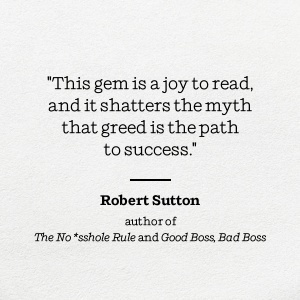
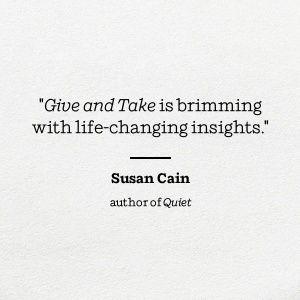
| ASIN | 0143124986 |
| Best Sellers Rank | #7,082 in Books ( See Top 100 in Books ) #60 in Business Motivation & Self-Improvement (Books) #65 in Leadership & Motivation #68 in Motivational Management & Leadership |
| Customer Reviews | 4.5 4.5 out of 5 stars (6,477) |
| Dimensions | 5.48 x 0.73 x 8.34 inches |
| ISBN-10 | 9780143124986 |
| ISBN-13 | 978-0143124986 |
| Item Weight | 2.31 pounds |
| Language | English |
| Print length | 320 pages |
| Publication date | March 25, 2014 |
| Publisher | Penguin Books |
W**K
How to succeed by being a giver who does it right
In the opening pages of Give and Take: Why Helping Others Drives Our Success, Adam Grant says: “Every time we interact with another person at work, we have a choice to make: do we try to claim as much value as we can, or contribute value without worrying about what we receive in return?” Then Grant defines three characteristic ways of dealing with that choice. “Takers” try to get as much value as they can. They want to come out on top. They want to win. “Givers” are their polar opposite. Givers try to give as much as they can without worrying about what they get back. According to Grant, both of those styles are rare and at opposite ends of a continuum. In the middle are what he calls “Matchers.” Matchers worry about a fair exchange. They’re willing to help others, but they also try to protect themselves, and many of their transactions come out even. Which type is most likely to succeed? Here’s Grant: “Across occupations, it appears that givers are just too caring, too trusting, and too willing to sacrifice their own interests for the benefit of others. There’s even evidence that compared with takers, on average, givers earn 14 percent less money, have twice the risk of becoming victims of crimes, and are judged as 22 percent less powerful and dominant.” Wow. I’ve always thought of myself as a giver. My instinct is to say “Yes” when somebody asks me for something, without worrying too much about what’s in it for me. In fact, one of the hardest things I had to learn during my lifetime was that if I wanted to be successful, I needed to say “No” a lot more. I’ve been taken advantage of many times in my life because of that giving nature. I figured that was okay, though, because I couldn’t see myself really acting like either a taker or a matcher. Grant’s statement made me stop and think. The bottom of the pile? I had to stop reading for a while and process what I read. It took a while and a bunch of soul searching, but I finally realized that I was okay with that. If that had to be the cost, then that was the cost. Besides, I thought I’d done pretty well in my life. When I returned to the book, here’s the next thing I read. “So if givers are most likely to land at the bottom of the success ladder, who’s at the top—takers or matchers? Neither. When I took another look at the data, I discovered a surprising pattern: It’s the givers again.” When Grant outlined the things about the differences between the givers at the top and bottom of the career achievement heap, they matched up well with my life experience. One of the neat things about being 72 is that you’ve got a lot to look back on, and what I realized was that my giver behavior was very different today than it was 50 years ago. As I went through the book, I discovered that most of the strategies that Grant talks about to make givers more successful and productive were things that I had learned over my lifetime. It took longer that way. Plus, learning from experience is much more painful than learning from reading. But what’s in Give and Take matches up with my life experience and is supported by an awful lot of evidence. I will admit, that as a writing coach, I wanted to applaud Grant for the way he handled that revelation. It was an absolutely masterful bit of writing. Masterful writing’s characteristic of Adam Grant’s books and Give and Take is no exception. He tells you what you’ll find in the different chapters, and then supports his points with both story/examples and research. The examples are good, and the research is solid and wide-ranging. Whether you decide to change your behavior and become more of a giver or not, you’ll still learn a lot from this book. It’s a good read with good lessons. Grant summarizes many of those lessons in a final chapter called “Actions for Impact.” That chapter has 10 suggestions for specific things that you can do based on what you’ve learned in the book. It is a solid, practical chapter, and gives you a way to experiment with some ideas you might have gotten in the earlier pages. In A Nutshell In Give and Take: Why Helping Others Drives Our Success, Adam Grant reveals that a life strategy of being a giver as opposed to a taker or a matcher can work for you, but only if you do it in a sensible and intentional way. The book is filled with great examples and the points are supported with research.
R**E
Recommended!
According to author Adam Grant, everyone is a giver, taker, or matcher, both at work and in their personal lives. The meanings of these labels are obvious. Givers like to give more than they get from others. They give feedback, mentor others, review others' work for accuracy, and provide help any time they're asked. Takers, on the other hand, like to get more than they receive from others. They will ask for help, but they aren't there when others need help in return. They will take what they can get and then dump you. Most common are the matchers, and we see them often in the workplace. Matchers often help others, expecting help in return when they need it. They keep a subconscious tally to keep track of the relationship, expecting to keep the effort on both sides even. Mr. Grant's research addresses which of these three personalities is the most successful at work. As an example he uses Abraham Lincoln's early political career in which he sacrifices an early race for senate to help a colleague; what might have seemed like a mistake at the time came around to help him far more in the end. In chapter 2 the author discusses the differences between how takers and givers build networks. Subsequent chapters address the ripple effect of giving, identifying givers and their potential, and how communication styles differ between givers and takers. Whereas early chapters of Give and Take discuss how giving personalities tend to be more successful in the long run, the second half of the book addresses some of the pitfalls of giving and how to avoid them. Chapter 6 discusses the potential for burnout and how to avoid it (hint: the trick is to become more engaged but in different ways). Chapter 7 addresses how giving personalities can avoid becoming a doormat for others who ask for too much and take you for granted. In chapter 8 the author discusses how a culture of giving can be encouraged and uses as one of his examples the online service Freecycle. Finally, Mr. Grant provides 10 action items that will help readers develop their giving tendencies and create stronger networks. Give and Take is an excellent exploration of how the tendency to help (or not) can make a huge impact on your life and career. Backed by a lot of research, cited in a fairly lengthy references section, Grant provides a lot of fodder for thought and discussion. Filled with anecdotes to support his research, Give and Take is well-written and fun to read. This would be an excellent book to use for a reading group or a workplace discussion.
T**S
do better. Takers
In this book the authors divide the world into three types of people, givers, takers, and matchers. As expected, givers are the suckers, those people who mentor, donate, and always help others at personal cost. Matchers, who give and take equally, do better. Takers, the kind of people who say that it's no holds barred out there and that's why they're justified in screwing over everyone dumb enough to get screwed over, tend to do okay too. But here's the weird part, the people who do even better than that are also givers. I had to find out if there was a way in which I could still be generous and not come to regret it. The authors tell stories in which selfish jerks lose out and the generous trusting sorts have their good works repaid. The book has some other information, which is tangential but fascinating, such as how to keep from getting burned out if you are in a job, which requires you to give and give and give. Also, it shows how to motivate charitably minded people versus how to motivate people who are more self-centered. Overall well written and an easy read.
A**A
Thanks
A**R
Interesting read. Author argues that people are divided into three groups: givers, takers, and matchers. Givers are often at the very bottom and very top of the success ladder. As a selfless giver, I often wondered if my personality as a giver made me less successful at work. This book made me realize that by being a giver but also looking after my own self-interest, I can actually become very successful and be able to give more at the same time, creating a win-win environment in the world.
S**E
I learnt a lot about myself and many people around me from reading this book. I also picked up essential lessons for optimising my approach to supporting colleagues, friends and family in various endeavours where I have generally considered giving some form of support.
P**J
Very good quality
M**N
Saw the book in a bookstore in Amsterdam Airport. Bought it, read it, loved it. Bought a couple more of them and gave them away to friends as a gift. Why? 1) I like self help books 2) I like when the "good people" win (ok, I may look a bit simple minded) 3) I like success (mine as well as success of others) This book shows how the "good people" win and generate success beyond their own lives as well as for themselves. The book explains how selflessly helping of others ("giving") is not "outright stupid" in a capitalistic world. Yes, you can exhaust yourself and help without ever getting something back. Yes, you can be a money grubbing capitalist ("taker") and have - at least a short lived - success. This book shows why - with some minor tweaks - a giving attitude creates abundant success around you as well as for you. Yes, this book asks for commitment, dedication, hard work and the other virtues we may have heard about in school. There is no way around it. At the same time it shows how these disciplines go along with joy, fun, good mood, and most importantly success. Altruism is concept thought of and discussed at least since Auguste Comte in the 19th century. Adam Grant explains and refines it in an easy to read and easy to digest way. Watch out, the book might change your live or at least your way of living :-)
Trustpilot
2 months ago
3 days ago