Desert Online General Trading LLC
Dubai, United Arab Emirates
Desert Online General Trading LLC
Dubai, United Arab Emirates

Full description not available
K**R
Historical fiction that you can't put down. Even better than book one.
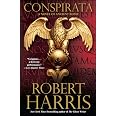
This is the second of three books by Robert Harris about ancient Rome. I was very pleased with the first one, ‘Imperium’, and gave it five stars; I am even more enthusiastic about this one. The series revolves around Marcus Cicero, known as the world’s greatest orator and its first professional politician. The first book followed him in his rise from obscure lawyer to consul, the leader of the senate. This book begins as Cicero embarks on his one-year term as consul and follows his career as he deals with not only day to day life as a Roman leader but also as he strives to keep the Republic from being destroyed at the hands of enemies from within.It is written as if it were a personal record written by Tiro, Cicero’s long time secretary and slave. In fact, Tiro did exist and actually did write a history of Cicero’s life, although the original record has been lost. The author states that the books are as faithful to the existing historical records as possible, albeit with an eye toward making a readable novel. And readable it is. The prose itself is remarkably thoughtful, witty, educated, and unique. It almost wouldn’t matter whether the story itself was good or not; to simply read Tiro’s account, with his interesting perspective and his dry humor, is quite entertaining.The story takes place around 60 B.C. The Roman Empire has been in existence for centuries and is in the process of transitioning from a functional government elected by the people to a dictatorship ruled through brute force by a single man. The tale is populated by personalities well known to history, including such figures as Pompey, Sulla, Sura, Catalina, Hortensius, a young Mark Antony, and none other than Julius Caesar. Although the books center around Cicero, it is Caesar who is the antagonist, the increasingly present evil behind the scenes. It was Caesar, by virtue of his seemingly inhuman ambition, who was the architect of the destruction of the Roman constitution, and this segment watches his rise from junior politician to dictator over the whole of the empire.The author weaves together politics (making this universally loathed occupation interesting and to some degree respectable), subterfuge, intrigue, debauchery, manipulation, military prowess, ambition, ego, patriotism, and most other aspects of the human condition into a story with ever-increasing tension that you just have to finish. And on top of that, it is quite a history lesson, as the events in this book actually happened. If you have any interest in Roman history, or even if you just want a great book, read “Imperium” first and then read this one. You’ll find yourself begging for the next one.
K**.
"He was absolutely certain that Caesar was up to something....But what was it? That was the mystery."
Harvard law professor Mary Ann Glendon penned a piece called "Cicero Superstar." In her overview of this illustrious Roman's life she noted that his preserved letters contain some laments about a lack of confidants: " 'I go down to the Forum surrounded by droves of friends, but in the whole crowd I can find no one to whim I can make an unguarded joke or let out a friendly sigh.' " Well, Robert Harris mitigates this somewhat by making Tiro, the scribe, someone upon whom Cicero relies and and trusts with sensitive matters. As Harris notes, Cicero did write to his slave stenographer, " 'Your services to me are beyond count.' " Both Imperium: A Novel of Ancient Rome and now Conspirata: A Novel of Ancient Rome are narrated by a Tiro who serves as confidant and advisor. At times this stretches credibility -- especially when Tiro archly, though mildly, implies he is smarter than his master and paints himself the hero. However, CONSPIRATA does not really suffer from this device; Tiro supplies an "common" view of Cicero that a fellow Senator, for example, wouldn't as convincingly convey.Cicero himself, through Tiro's eyes, is a man whose vanity sometimes gets the better of him, who isn't above a bit of graft, and who is occasionally politically tone deaf. But one never loses sight of this statesman's intrinsic desire to serve his republic with integrity and honor.CONSPIRATA covers 63-59 B.C. This "lustrum" -- meaning five-year duration (the title (Lustrum: A Novel) was chosen for the previously published British edition) -- began with Cicero's momentous one-year term as consul. In the following four years, he was celebrated as "pater patriae" (father of his country) but then suffered a drastic downturn in political and economic fortunes as Caesar, Pompey, and Crassus seized power. This novel introduces a gruesome murder mystery in the first pages that leads to an internecine conspiracy against the republic. The book convincingly traces the path that Cicero might in reality have followed in order to finally reach the defining decision of his consulship, namely that several high-ranking Romans should be executed without formal trial.Presumably, at least one more volume will be forthcoming to finish this story of Cicero's struggle with Rome's more dictatorial powers-that-be. In that final novel, perhaps we will read more about Cicero as philosopher since after this lustrum he wrote his celebrated dialogues DE REPUBLICA and DE LEGIBUS (found herein: M. Tullius Ciceronis De Re Publica, De Legibus, Cato Maior de Senectute, Laelius de Amicitia (Oxford Classical Texts)) -- and many of his approximately eight hundred surviving letters.Quoting from another of those missives, Glendon aligned Cicero's worries about "whether, when, and how far to compromise for the sake of advancing his most cherished cause -- the preservation of the traditional system he called republican" with current relevancies about government strength and form. As with IMPERIUM, Harris uses CONSPIRATA to accomplish precisely the same thing: he depicts Cicero's Rome as a decaying republic being pulled into tyranny, and in the political chicanery and intrigue of ancient times, one sees the indubitable reflections of modern problems with aging "democracies" that are leaning too far toward bread, circuses and central authority.CONSPIRATA is a worthy successor to IMPERIUM, although it is more concerned with plot than its predecessor and gives the impression of being a more hastily written novel. IMPERIUM developed its plot at a relatively leisurely pace in order to build a character portrait; CONSPIRATA hastens -- sometimes summing up little things like wars in a few paragraphs -- to focus on particular actions in Cicero's life. Regardless, it too is entertaining, enriches understanding of Cicero and his compatriots, and it unquestionably reminds us that if we do not keep the lessons of history uppermost in our minds, we could well repeat the patterns of Cicero's Rome.
Trustpilot
2 days ago
2 months ago