
Buy anything from 5,000+ international stores. One checkout price. No surprise fees. Join 2M+ shoppers on Desertcart.
Desertcart purchases this item on your behalf and handles shipping, customs, and support to Ecuador.
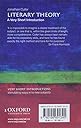
What is literary theory? Is there a relationship between literature and culture? These are some of questions addressed by Jonathan Culler in this new edition of his highly popular Very Short Introduction . Culler, an extremely lucid commentator and much admired in the field of literary theory, uses easy-to-grasp examples as he outlines the ideas behind schools of criticism that can otherwise be quite daunting, such as deconstruction, semiotics, and postcolonial theory. He explains "theory" not by describing warring "schools" but by sketching key "moves" that theory has encouraged, and by speaking directly about the implications of theory for thinking about literature, human identity, and the power of language. In this Second Edition, Culler includes much new material, including a discussion of the "death of theory," a look at topics such as trauma theory, ecocriticism, and the link between the theory of narrative and cognitive science, plus a new chapter on "Ethics and Aesthetics." The book also includes updated bibliographies. Shedding light on everything from literature and social identity, to poetry, poetics, and rhetoric, Literary Theory is a welcome guide for all lovers of literature. About the Series: Combining authority with wit, accessibility, and style, Very Short Introductions offer an introduction to some of life's most interesting topics. Written by experts for the newcomer, they demonstrate the finest contemporary thinking about the central problems and issues in hundreds of key topics, from philosophy to Freud, quantum theory to Islam. Review: A Superb Introduction to a Now-Dated Subject - This is an excellent introduction to Literary Theory by a person who is well positioned to provide it. Jonathan Culler has achieved prominence for his ability to explain complex materials in a fair and balanced way. Here the subject is one of his ‘usuals’—literary theory. Note that this is capital-T Theory, not the literary theory which begins in antiquity, continues through the middle ages, renaissance and enlightenment until being somewhat displaced by the Romantics under the particular influence of Kant’s Critique of Judgment. This is the theory associated with the French Nietzscheans and their structuralist predecessors (again, preceded by the linguistic concerns of Saussure). Culler is clearly fascinated by it and supportive of it, but he realizes its hegemonic tendencies, which is particularly interesting for an intellectual movement which is centered around the effacing of cultural hegemony. He notes, e.g., that Theory consciously reduces our study of literature (we still read Shakespeare, but Beaumont and Fletcher, Ben Jonson, Thomas Kyd, et al. not so much). He recognizes and acknowledges the politicization that is never far from the surface in the work of Theory’s practitioners. He does not go so far as to say (with Theory’s critics) that Theory’s attack on the enlightenment and its norms is a way of salvaging socialism; since socialism’s fortunes in the real world are stained with blood, the truth claims of the enlightenment empiricism which records those processes are systematically undercut. He does not point out the antinomianism which frequently characterizes Theory; E.D. Hirsch, e.g., has described it as ‘cognitive atheism’. Most important, he is far more optimistic about Theory’s future than current practice would suggest. Louis Menand, e.g., has charted the tendencies in postwar literary study and has seen us now move past Theory’s better days. At the micro level the student interest in Theory has waned immensely, though its political dimensions continue to influence their practices. At my institution the number of prospective graduate students expressing an interest in specializing in Theory has dwindled to a small trickle. The contrast between current realities and the days in which Theory’s advocates argued for a complete displacement of traditional literary study has passed. Bottom line: Culler’s introduction is now, primarily, a historical document, but it is a very good one, one that not only identifies the players and their ‘schools’ (acknowledging that the outlines of such entities are often vague). He even includes some clever and instructive cartoons (without noting, in passing, that Theory’s practices are often conducive to such representations). The writing is very lucid, in contrast to the often opaque and convoluted writing of the Theorists themselves. In sum, this is an excellent short introduction to the subject, one of the best in this series. Review: A gentle introduction to theory - The fact that literary theory is often referred to as just 'theory' should alert the newcomer to its amorphous and unfocused nature. It is no longer concerned just with literature, but with every aspect of culture and experience. It is a theory of theories, a post-modernist stocktaking of the western intellectual tradition. Culler traces several paths through this boundless philosophical landscape. Seven such paths actually, exploring aspects of language, identity and meaning. These constitute as gentle an introduction as is possible. In fact, it is difficult to imagine a better guide than Culler, with his clear and elegant style and his breadth of knowledge. Although this is not a conventional school-by-school primer, there is a section at the end briefly summarizing the major schools, from Russian Formalism to Queer Theory (yes, you heard right). The author advises that you can read these summaries before, after, or during the main text. I recommend leaving them until after, when they will be a lot more meaningful. Otherwise, they might frighten you off from reading the text itself. The illustrations consist of a half-dozen or so vaguely relevant cartoons. I suppose, as this series is illustrated, OUP felt obliged to include something, even if the text had no need of it. More positively, this book is blessedly free of the typos that normally bedevil the series. If you wish to 'dip your toe in the water' of literary theory (and be warned, it is a maelstrom) Culler's book is the perfect place to do it.


| Best Sellers Rank | #61,219 in Books ( See Top 100 in Books ) #1 in Literary Theory #92 in Literary Criticism & Theory #172 in Literary Movements & Periods |
| Customer Reviews | 4.4 out of 5 stars 672 Reviews |
R**Z
A Superb Introduction to a Now-Dated Subject
This is an excellent introduction to Literary Theory by a person who is well positioned to provide it. Jonathan Culler has achieved prominence for his ability to explain complex materials in a fair and balanced way. Here the subject is one of his ‘usuals’—literary theory. Note that this is capital-T Theory, not the literary theory which begins in antiquity, continues through the middle ages, renaissance and enlightenment until being somewhat displaced by the Romantics under the particular influence of Kant’s Critique of Judgment. This is the theory associated with the French Nietzscheans and their structuralist predecessors (again, preceded by the linguistic concerns of Saussure). Culler is clearly fascinated by it and supportive of it, but he realizes its hegemonic tendencies, which is particularly interesting for an intellectual movement which is centered around the effacing of cultural hegemony. He notes, e.g., that Theory consciously reduces our study of literature (we still read Shakespeare, but Beaumont and Fletcher, Ben Jonson, Thomas Kyd, et al. not so much). He recognizes and acknowledges the politicization that is never far from the surface in the work of Theory’s practitioners. He does not go so far as to say (with Theory’s critics) that Theory’s attack on the enlightenment and its norms is a way of salvaging socialism; since socialism’s fortunes in the real world are stained with blood, the truth claims of the enlightenment empiricism which records those processes are systematically undercut. He does not point out the antinomianism which frequently characterizes Theory; E.D. Hirsch, e.g., has described it as ‘cognitive atheism’. Most important, he is far more optimistic about Theory’s future than current practice would suggest. Louis Menand, e.g., has charted the tendencies in postwar literary study and has seen us now move past Theory’s better days. At the micro level the student interest in Theory has waned immensely, though its political dimensions continue to influence their practices. At my institution the number of prospective graduate students expressing an interest in specializing in Theory has dwindled to a small trickle. The contrast between current realities and the days in which Theory’s advocates argued for a complete displacement of traditional literary study has passed. Bottom line: Culler’s introduction is now, primarily, a historical document, but it is a very good one, one that not only identifies the players and their ‘schools’ (acknowledging that the outlines of such entities are often vague). He even includes some clever and instructive cartoons (without noting, in passing, that Theory’s practices are often conducive to such representations). The writing is very lucid, in contrast to the often opaque and convoluted writing of the Theorists themselves. In sum, this is an excellent short introduction to the subject, one of the best in this series.
P**E
A gentle introduction to theory
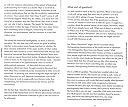
The fact that literary theory is often referred to as just 'theory' should alert the newcomer to its amorphous and unfocused nature. It is no longer concerned just with literature, but with every aspect of culture and experience. It is a theory of theories, a post-modernist stocktaking of the western intellectual tradition. Culler traces several paths through this boundless philosophical landscape. Seven such paths actually, exploring aspects of language, identity and meaning. These constitute as gentle an introduction as is possible. In fact, it is difficult to imagine a better guide than Culler, with his clear and elegant style and his breadth of knowledge. Although this is not a conventional school-by-school primer, there is a section at the end briefly summarizing the major schools, from Russian Formalism to Queer Theory (yes, you heard right). The author advises that you can read these summaries before, after, or during the main text. I recommend leaving them until after, when they will be a lot more meaningful. Otherwise, they might frighten you off from reading the text itself. The illustrations consist of a half-dozen or so vaguely relevant cartoons. I suppose, as this series is illustrated, OUP felt obliged to include something, even if the text had no need of it. More positively, this book is blessedly free of the typos that normally bedevil the series. If you wish to 'dip your toe in the water' of literary theory (and be warned, it is a maelstrom) Culler's book is the perfect place to do it.
S**Y
Good scorecard for identifying all the players
Honest book that identifies different schools of thought without any apparent bias. Author is not "selling" anything, just describing things as well as possible. Very nice glossary, too. Note: This Oxford series is inconsistent - some of the authors take their roles seriously, even if for "very short introductions," while others must have submitted their mss. after writing up some notes after an afternoon at the beach, or perhaps in the local pub. This may reflect the inconsistent editing or even lack of real focus of the series as much as anything. But this book is a model of the right way to do it. You will need to read deeper books, of course, to get a real handle on what's going on with literary theory.
S**N
Wonderful Introduction
This little book might be a godsend for English lit majors (Ok, I'm exagerrating a little). Having taken quite a number of literature classes myself in university (but no theory) I was little confused as to what the heck was the point of interpreting literature. Now, it does provide a mental exercise (long nights thinking about Borges' short stories) but I needed a goal. It wasn't until I picked up this book and read it that I realized that literary/critical theory has a point and a very interesting one at that. Culler writes in language you can understand (something those deconstructionists have a hard time doing) and uses good examples to illustrate his point. He provides much food for thought and the book is oozing with ideas to clog your brain with. However, for those looking for an overview of different literary schools of thought, there is not much here, only an appendix at the end that briefly describes some of the modern schools. That being said, if your a confused English major (like some people I know) that is wondering why interpret literature at all, I think this book can help you find the way.
S**S
Teachers use to enrich your literature units -
Already own a copy and have used in my English classes. Great break down for a novice, in theory. I especially like the "identity" unit. Have modified and taught it over and over to all levels and grades of high school students, who are fascinated with themselves and want to learn how their "identity" develops and continues to evolve. The theories are easy to grasp and . . . relevant. [Connections in various works of literature.] I also used this unit for my MA in English. The unit was an excellent source, for the Multicultural Literature course. Hot topic and timeless . . . Culler does a great job, in a concise little handbook.
R**S
But it's a real shame...
Whoever at Oxford Press designed this excellent book has done the author a great disservice in choosing an 8-pt. type size for the text. I was involved in design and typography for over 30 years and in my opinion, unless you have close to 20/20 vision you might have a bit of a problem. Aside from that, the book is a great read. Chapter 2 alone--"What is Literature and Why Does if Matter?"--is worth the purchase. If this paperback came with a pair of readers, I'd give it 5 stars. If there's a hardcover version, I hope it has a larger format, the content is more than worth the consideration.
K**U
wish i read this earlier
I have a Master's degree in Literature and when it came time for my requisite literary theory courses, they were taught in the driest, most pretentious, disconnected from reality way possible. So much so that I decided that the academic study of literature was for people who wished to escape reality and deny their responsibility as citizens of a troubled populace. This small book reaffirmed my love for the study of literature, albeit years after my life has taken other turns. Cullers, rather than simply defining and describing the different schools of literary criticism (which was what I bought the book expecting), approaches the material with the questions of "what does it mean to read?" and "what makes literature distinct from other forms of expression?" With a historical perspective and an ear for how people have used rhetoric and literary devices over time, this is a short, but fascinating explanation of why the study of literature is relevant. Perhaps there are better, more comprehensive books out there, but until I read those, this one is worth 5 stars!
C**G
Good primer on Lit Theory
It was recommended that I read this book in preparation for my masters of english lit program. The book is surprisingly engaging for such an academic topic. I felt that the information was solid and provided me with a good foundation for discussing and applying literary theory. The book is easy to read while not feeling dumbed down. Culler does a great job of avoiding academese. I would recommend this for anyone taking the GRE in Literature exam or who just has an interest in better understanding literature.
R**S
Extraordinarily Easy and Lucid to Grasp
Oxford's Very Short Introduction series is very helpful in understanding any difficult concept. With simple and effective explanation authors make everything easy to grasp. Thanks to the publishers, authors and product distributors for being a part of knowledge sharing process.
T**X
Top
top
F**O
Infumable
No sirve gran cosa para aprender literatura. Muy útil en cambio para comprobar el estado de desorientación y sectarismo de buena parte de este campo de estudio.
C**N
Perfetto
Condizioni ottime
B**F
Gut
Gut
Trustpilot
2 weeks ago
4 days ago