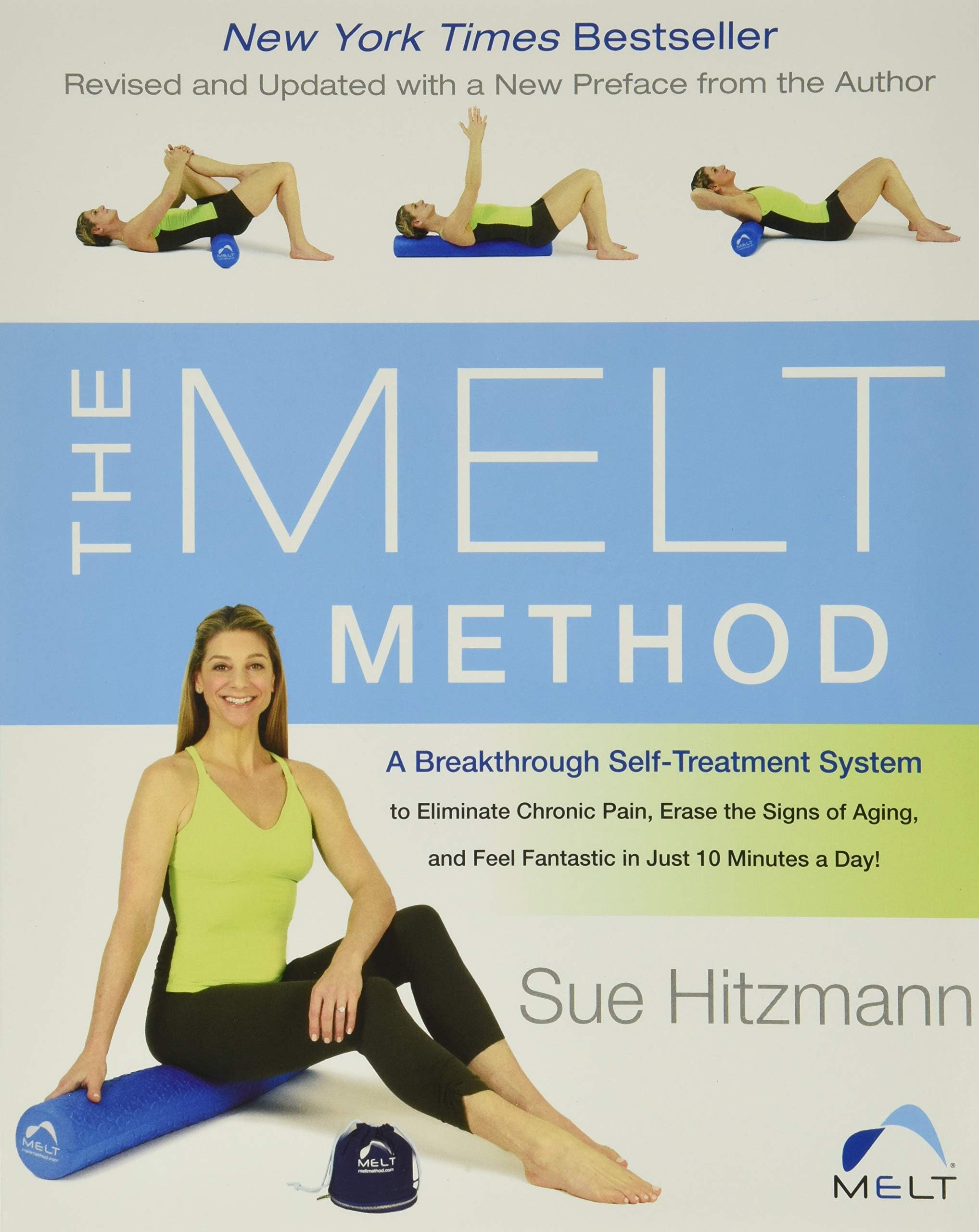
First up, I sought out this book because there's just no way I'm going to pay someone else to give me a massage. Lots of reasons for that, but that's the bottom line. I wanted to find some relief from aches and pains that I thought must be due to tension and built up stress, and this seemed a likely starting place that would be more comfortable than trying to work with a hard roller. People are complaining that it seems too hard to get to the meat of things in the book. (There really isn't a quick-start section in the book, though she does walk you through a few things early on, those exercises aren't the main lessons, and they're just an introduction.) In some ways I agree that this not quite ideal, but then again she's crammed a memoir, textbook, and workbook all in one volume, and intersperses bits of each as you go along. Towards the end, there are more specific sections saying, essentially, 'if you want to treat this specific issue, do this, then this ...', and there's a lot to absorb before you get there. Working gently, with focus and attention is pretty much essential. Without learning what you're doing, why and how, I think it would be awfully easy to work sloppily and inattentively, which would probably decrease the effectiveness of the work. (That's my experience, at least. I have to be focused on what I'm doing, and paying attention.) Me? I'm just glad the book EXISTS, whatever quirks of presentation it might have. I don't live in a part of the world where Sue might visit for workshops or anything else, and I don't have the freedom to travel, so this do-it-yourself technique is pretty much my only option. Better to flip through some pages, than do without. Unlike some reviewers, I was not much annoyed by her writing style. I've read some really bad fitness/health books by people with more enthusiasm than material, and this book is leagues ahead of those. The author is clearly kind of obsessive, but I don't think the book (or the method) would exist without that, so I'm not distressed by it. She's totally committed to sharing what she's learned, excited about her discoveries, fascinated by what she's learned, and amazed by the experiences she had along the way. Sharing this energy is part of the fun of the book, experiencing things she felt and thought along the way, and how one thing led to another. She's done her own research over years of work, and didn't copy someone else to get here, and I think that's admirable. If it takes her a while to explain all that, so be it. Her story and her journey are very personal, and apparently very deeply felt, and seems quite genuine. This personal style of presentation doesn't bother me. The technical/anatomical stuff doesn't fascinate me quite as much as the rest of it, but I was interested to read about it, if nothing else to understand the parts of the body I'm working with. If you're looking for a quick-start guide, the card set that comes with the hand/foot kit is really great, but it seems to me that the cards and the book (and the video, for that matter) don't quite match up. I'm assuming she added small things as things were in production on each item, so each has a little bit that's not in the others. The bits in question are interesting additions, but don't necessarily diminish the experience of working with the balls and the rollers. A very brief session can bring a lot of relief, and it seems to me so long as you manage to do some pressure point work, gliding, shearing and rinsing, first with the soft balls then the harder ones, or just on the soft roller, that's plenty. :shrug: I like having a variety of options. I just try to incorporate a bit of MELTing into every day, just to get a routine going, and it seems to be 'enough' pretty much no matter what I do. The author does stress the importance of doing self assessments before and after each session, it really does help me notice the changes that are taking place. (For example, the difference in my hands seems kind of subtle, but it's there, and over time has gotten better still. I might not have noticed, if I hadn't made the effort to keep track.) It's possible that part of the self-assessment is more meditative than some people are comfortable with, but I do find it therapeutic and helpful. (It's a physical check-in, noticing what's going on with the body and limbs, noticing spots of tension or release, etc., not anything metaphysical/prayerful.) As I've gotten older, I've had some aches and pains that came and went, stiffness that crept up on me, and I'd begun to assume that they were an inevitable part of the aging process. After having worked with the MELT Method for a few weeks on my own, some of those aches are gone, and I feel more limber and alert than I have in ages. Moving is easier, and I just feel more comfortable in my own skin. Whew. Who knew that was even possible? Sure, if I don't keep up with the techniques, the aches and stiffness come creeping back, (though staying hydrated as she recommends is very helpful), but at least now I know there's something I can DO to help them remain at bay. I bought the book first, just to see whether or not the techniques were doable. I even did a few things on my hard roller (which she cautions against, guess I missed that advice early in the book), and was definitely impressed. Wrong roller or not, the first night I used the MELT techniques, I slept better and more comfortably than I have in a long time. Once I realized that I needed to find a softer option while waiting for the soft roller and hand/foot kit to arrive, (didn't realize what level of firmness/softness was required til I saw Sue on youtube holding/bending a soft roller) I got the idea to buy one of those foam noodles kids play with in the pool, since they were super cheap at the big box store. I covered that with two layers of 3/4" foam from an otherwise awful and useless exercise mat I'd bought years ago and never used. Still firm, but softer than the hard roller. I rummaged around in a few stores, and found some rubber balls, and one little soft golf ball made of foam that I thought might do, and started experimenting with the hand and foot techniques. My backordered products didn't take TOO long to arrive, maybe 17 business days from order to arrival on the roller? Less for the hand/foot kit. I do prefer the MELT brand products to my cheap-y DIY versions, the balls in the kit are all a bit smaller than most of the ones I'd been using, and the soft balls are softer than anything I'd found (though the foam golf ball does come close, and works fine for the hand exercise where you work each finger, pressing first pad and tip into the ball one at a time.) My DIY pool-noodle soft roller with two layers of softer foam on top of the rather firm noodle is pretty much just the right firmness, but I do prefer the real one. The things I've picked up from her book that I've been trying to incorporate into my day: 1) Staying hydrated. 2) Getting a bit of sunlight, out doors, every day. (Shade is fine.) 3) Noticing what I'm feeling in my body. Aches, the urge to move, energy flowing, etc., whatever it is. 4) Noticing how movement seems to ease my stiffness, and how warming up makes moving less jarring. 5) Soft foam roller self-massage just feels good, so I don't dread it, put it off, or think of something else to do. The one thing I do have trouble with is doing the MELT techniques at least an hour before bed. Not sure why, but some days it gets pretty late before I get around to it. I've decided to accept this as proof that I'm more active than I have been in a while, and that's a good thing. For me, this is a do-able, adaptable set of self-massage techniques that help me feel more limber, active and comfortable. I hope she comes out with more of the quick-start cards for the work on the rest of the body, I find the ones for hands and feet very convenient. Plus, the book is kinda heavy, and hard to maneuver when I'm doing certain moves. The basic techniques are pretty simple, and once you get the idea, not hard to do.