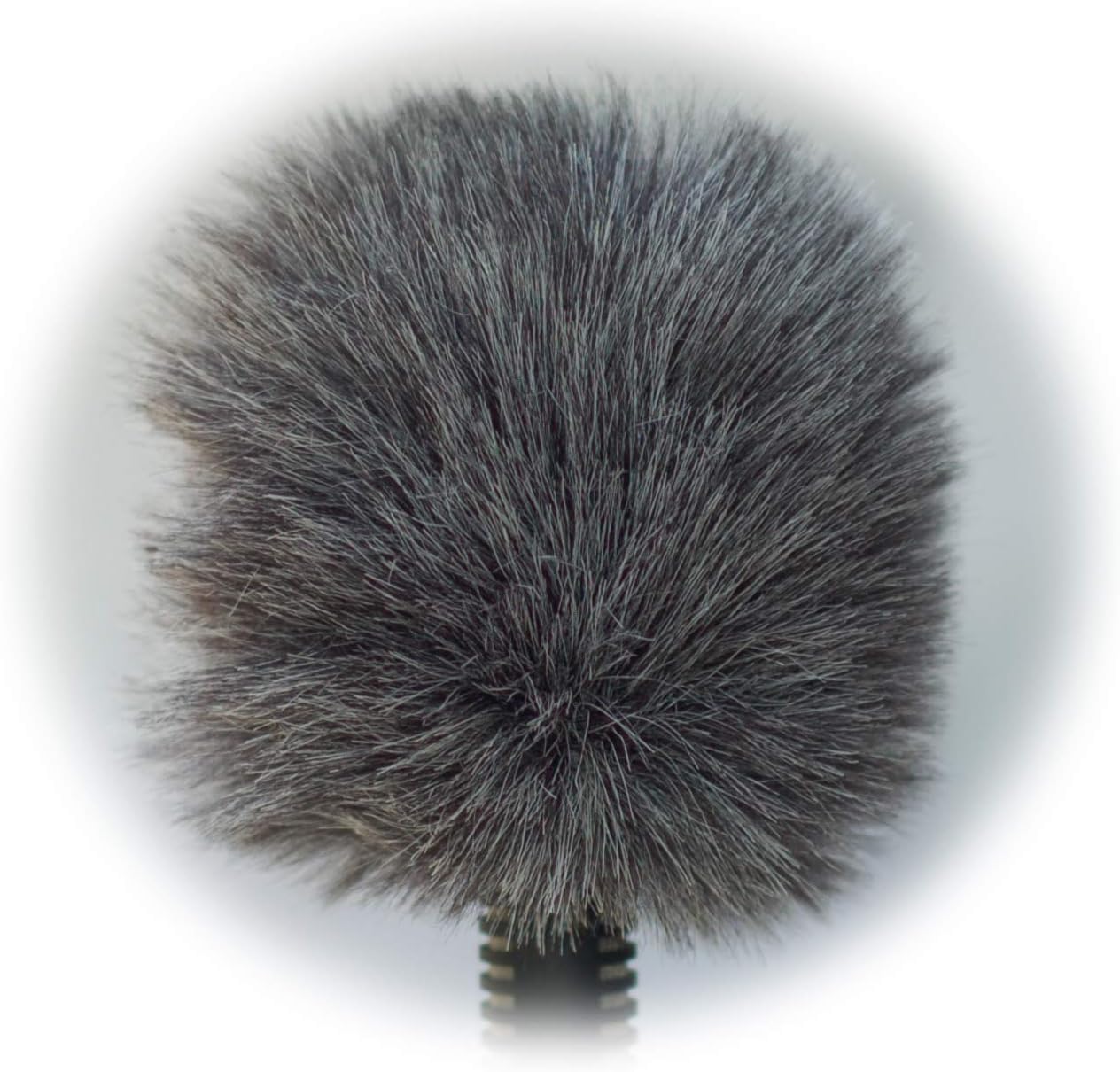
The official “sales blurb” says: Pelzabdeckung für Windschutzscheibe, kompatibel mit RODE M5 MP NT55 NT5 NT6 AKG p170 Mikrofon Zubehör German translations used by chinese companies are “interesting” - to be polite (here the term “Windshutzcheibe” actually means “Windscreen” (as in a car - not quite the same as “Windschutz” or “Windjammer" ;-) I tested two dead cats on one of my two pairs of Røde M5 MP for Matched Pair - specifically mentioned as compatible - matched small condenser microphones connected to a Zoom F6 hi-level recorder and recorded at 96kHz/32-bit float PCM. Recorder noise floor far below microphones. The wind noise suppression was performed this way: Microphones centered horizontally along the vertical monitor axis at roughly 1m with playback around 94dB (1 Pa). One microphone used this dead cat. The other microphone used the official Røde WS8 dead cat. I now have two of both, which was my original aim, but... only one pair are really usable, when heavy winds are blowing (read on). The test was performed by moving a ventilator (for fighting summer heatwaves) around the setup, right in front and behind as well as above and below - always centered between the two microphones (since the ventilator is very much larger in diameter, than the width/length of the microphone setup not that complicated). Extra tests were performed from left and right, where there naturally has to be differences, when the ventilator is hitting one mcirophone before the other. Two speeds were tested. A “mild breeze” inland far from the sea and “half a pelican” (maximum speed and power). See “AUDIO” - bottom channel #1 is Røde WS8. At mild breeze, the difference was not significant, but with real winds hitting the dead cats, there was no doubt whatsoever. You would clearly prefer the original australian “dead wombats” compared to the chinese “dead cats” any day. It’s really the difference between loosing the recording and getting results, that you can use in real life with little to no extra effort in post. Both channels were adjusted equally and both microphones are matched as a stereo pair at the Røde production site. After recording, the signal has been normalized (as a stereo entity - not each channel individually - in order to be able to establish the differences also in measurements). The conclusion is, that there is little “measurable difference” above 200Hz, but at lower frequencies the “non-official dead cats” deliver up to around 8 dB less wind suppression on average at 60Hz and below (see “FFT" - blue is Røde WS8 dead cat or as the aussies like to say: “dead wombat"). There are minor differences around 1kHz, but not at all in the same league than the really prominent wind noise compared to the Røde WS8. Whatever measurements are done, this shines through, and when listening in, there is absolute no doubt about the difference either. Short, but clear conclusion: Save your money. Buy the Røde WS8 instead. The price difference is relatively small, but the Røde dead cats were and still are in short supply. Hence the urge to test.