
Buy anything from 5,000+ international stores. One checkout price. No surprise fees. Join 2M+ shoppers on Desertcart.
Desertcart purchases this item on your behalf and handles shipping, customs, and support to Ecuador.
🍞 Elevate your kitchen game with the ultimate sourdough bible!
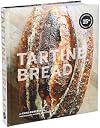
Tartine Bread by Chad Robertson is a top-ranked, critically acclaimed guide that demystifies artisanal sourdough baking. Featuring detailed, precise instructions and a unique no-knead method, it empowers home bakers to create bakery-quality bread and pizza dough using natural fermentation and steam baking techniques. With over 7,000 glowing reviews and a cult following, this book is essential for millennials seeking authentic, preservative-free bread and a rewarding culinary hobby.


| Best Sellers Rank | #5,050 in Books ( See Top 100 in Books ) #3 in Homebrewing, Distilling & Wine Making #10 in Bread Baking (Books) #31 in Celebrity & TV Show Cookbooks |
| Customer Reviews | 4.8 out of 5 stars 7,192 Reviews |
J**R
A Revolution in Making Sourdough
I am a big fan of simple sourdough sans commercial yeast and sugar. My preference began as a small child in the '60's with my beautiful grandmother Ora's sourdough rolls. She had a covered crock of it, fragrant with the lovely scent of apples, bubbling away, near her kitchen wood burning stove on a remote 400 acre cotton farm in northeastern Mississippi near Memphis. Elvis country. When the region was finally electrified, other cooks gladly ditched their wood burning stoves for electric ones. Ora (1897-1991) kept hers for breads which she cooked daily for the rest of her active life. Her electric stove sat beside her wood burner. She made the most amazingly fragrant, delicate, tender, fluffy sourdough rolls, seemingly by magic, and in no time. We ate them hot with farm butter and homemade muscadine jelly. They are still the best rolls I'd ever tasted. And guess what? None of her 8 children knows how to make these rolls. She did not make anything else with the sourdough as far as I know. Many times over many years, I tried yet another cookbook's sourdough bread recipe. I don't consider fakes--recipes with yogurt, sourdough with commercial yeast, or sourdough with cups of sugar to feed the sourdough. But not once were the writers of pure sourdough bread confident about their recipes. This was puzzling and disheartening. The best ones warned that the success rate for pure sourdough bread recipe--flour, salt, water -- was iffy. So my random success wasn't just on me. These people don't know what they are doing. Thankfully, I kept the faith. Then the Revolution in Sourdough Bread making came to me and mine when I found this book on Amazon's website in 2017. Thank you from the bottom of my heart Amazon and Chad Robertson! My husband, not a bread man, is in love with this bread. My daughter, a busy prosecutor, also makes it weekly for her fans! After reading this book and making the Country Loaf perfectly on the first try, I've entered a new era in sourdough baking. It's been 5 years since I bought this book and I'm still excited about it! My sourdough starter has aged and has a lovely rich floral/fruity/Tupelo honey scent. I most often use half King Arthur's all purpose and half Great River dark whole rye to feed it. I also use sprouted spelt flour from One Degree and Great River bread flour. The reason my sourdough now turns out perfectly is that Robertson gives his readers exhaustive instructions. Each time I get stuck or have a serious question, I sit down and re-read until I figure out my issue. He is the most chill and detailed craftsman I have ever met in print. These two qualities support his success! One of the main differences between making a commercial yeast loaf and a sourdough loaf is the style of kneading. The yeast loaf does best for me anyway with a lot of hand kneading, or more accurately kneading without any intention of ever stopping until I feel the dough slowly coming together beautifully into its not-so-sticky springy bouncy firm self. It can wear you out! I have machines that can do it but I like the hand made results better. Kneading sourdough in the same way is a big no-no. When you push down on a big ball of sourdough, you force the acculated air out of the dough and successfully flatten it, possibly for good! It may rise a bit on the second rise, but the final it may not rise much at all. Robertson's method explains everything. The photographs are beautfully artisitcic and instructive. And, wonderfully, it costs the baker way less muscle work to make sourdough breads. When your sourdough rises into a fluffy bilious mass of very soft dough, instead of kneading by pushing it away from with the heel of your hand, you delicately and deftly run your hand underneath the dough, grab it with your fingers and then pull upwards ever so gently, trying not to pop any bubbles appearing under the surface. Now, fold the dough, laying it delicately over the top. Voila! This sourdough will rise for you. For those who don't want to read and research to learn, good luck with that! I've been putting meals on the table since childhood and I couldn't have done it without investing time and effort. The rewards have been wonderful. Check out Chad Robertson on YouTube. You may be both humbled and inspired as I have been. I've given you a few tips from this Chef's book. There is so much valuable detail there that I keep mine in the kitchen. I'll leave you with this delicious teaser: Why does Chad Roberston burn his loaves?
T**E
please ignore the other reviewers
this book is about making possibly the best bread in the world in your own home. How dare people write a review without themselves attempting to make the bread described in this book? This is the book. This is what I've been missing. I have made Jim Leahey's no knead bread ever since Mark Bittman published it in the New York Times. Good bread, very good. But after a few years, I'm not enthused about it anymore, its lacking something. I tried sourdough... I purchased Ed Wood's " Classic Sourdoughs", good work on sourdoughs but not helpful for my bread making. I tried two different starters, tried bread, tried pizza. It didn't work for me. What Ed Wood lacks in his book is the intricacies, the small details, the tricks that are essential to making that perfect french loaf. Yes this book is about making that perfect french loaf of bread. For whatever reason, the French make the best bread in Earth. The author of this book "Tartine bread" apprenticed with French artisan bakers. Chad Robertson shares his tricks that he has picked up from fifteen years of artisan bread making. Apparently, he makes good bread, his bakery in San Francisco sells out his daily production within one hour of hitting the shelves. Anyways, about the bread, about MY BREAD. I made the bread yesterday, actually I've been in the process of making it for four days. I had an Ed Wood's starter that had been stashed away in the back of my fridge for over a year. It took me three days to reactivate it, with repeated feedings finally got the batch to double in volume two nights ago, so had my starter ready to go (which is cheating because the author describes how to make your own starter from scratch in 3-5 days). On the first day I made an active leaven, then in the evening added this to flour and water and salt to make the dough. I let the dough rise overnight, then prepped it the next day and baked it in the afternoon. Bakes just like no knead bread. The results? Well, it looks pretty much like no knead bread, but when I cut into it, it has a sour smell, but when I taste it, the sour taste is there but not sharp and not unpleasant. The crumb is fantastic and the texture, when you bite into it fresh, is unbelievable. The bread is now a day old, and looks and tastes great, it definitely has more character then no knead bread. My bread is not perfect (who do you know that does things perfectly on the first go?). My dough was a little flat, lacks oven spring. My slashes didn't expand during bake. My dough was tough, lacked extension, when I folded it for final shaping. But I am pretty happy with this new methodology. A lot more involved than no knead bread, but achievable for anyone with the motivation to make a great loaf of bread. If you want to take your no knead bread to the next level this is the book. thanks Chad
C**L
My Homework Assignment
Being essentially lazy, I seldom write an Amazon review. It feels a lot like homework, and nobody likes homework, right? Still, I occasionally discover a book or a product that so exceeds my expectations that I feel a duty to share my good fortune with my fellow consumers. Chad Robertson's "Tartine Bread" is one of those discoveries. Robertson's book contains an important ingredient that other bread books lack: detail. For example, in her book "The Italian Baker," Carol Field provides recipes for dozens of Italian breads. I have enjoyed the book, but each recipe is more of a rough guide than a detailed road map. She uses instructions such as "Make a big round shape of it [the dough] by just folding and tucking the edges under a bit." She tries to describe the state of dough development using words like "velvety" and "moist." The book contains a few line drawings but no photographs. By contrast, Robertson's book contains detailed instructions together with hundreds of photographs leaving no doubt what the developing dough should look like at each stage of the process. The photographs and Robertson's autobiographical tale make "Tartine Bread" a joy to read. Most important, the bread I've produced following Robertson's instructions has been wonderful: a cracklin' crispy crust, soft chewy crumb, faint aromas of hazelnut and chocolate (I have no idea why), and beautiful colors ranging from creamy white to almost black. I have shared this bread with just two friends so far. Both have now placed orders for the book and for the dutch oven combo that Robertson recommends. I have seen some concern that this book contains too few recipes. My advice: don't worry about it. If this book does nothing more than teach you to bake the "Basic Country Bread," it will be well worth the price. I am unsure about the propriety of criticizing a review written by another Amazon user, but I cannot resist taking E. Hanner to task for his November 10, 2010 misleading critique, "Tartine -- choose another book." Hanner finds fault in Robertson's explanation of baker's percentages, saying: "Robertson ... attempts to de-mystify bakers math so you learn to `think like a baker.' Then his representation of the recipe or formula is in my opinion very non standard and confusing." In fact, Robertson's explanation of the baker's percentage is entirely correct. (See, Harold McGee, "On Food and Cooking" (New York: Scribner, 2004), p. 527 and Michael Ruhlman, "Ratio: The Simple Codes Behind the Craft of Everyday Cooking" (New York: Scribner, 2009), p. 5.) Hanner seems unhappy that the components in a baker's percentage add up to more 100%. That, however, is why it's called a "baker's percentage" and not a "mathematician's percentage." Hanner also seems to misunderstand that the flour in the leaven is included in the percentage of leaven rather than the percentage of dough flour. Finally, Hanner expresses concern for our safety, complaining that "[t]he concept of baking in a cast iron combo cooker is in my opinion, an accident waiting to happen." Even the most humble home cook handles hot pans regularly. We're not children, for crying out loud. Hanner claims that his critique is not mean spirited, but it's hard to believe anything else. Robertson has written a wonderful book that succeeds (where other bread books have failed) in providing a detailed, illustrated path to better bread building.
B**J
If you Sourdough, this book is amazing.
I follow this guy's bread recipes. Best bread I have made in 4 years of baking.
B**3
Sourdough Revived
This book revived my sourdough baking. The instructions are clear and measurements spot on! All of the recipes offered, that I tested were wonderful! The photos make things clear and help to understand the dough. I use this several times a week.
C**H
some mistakes in math, good 2nd or 3rd bread book
To start out, yes, Chad's baker's math is all wrong. He misrepresents baker's math and provides incorrect calculations. The amount of flour and water in the levain/leaven should be taken into consideration when calculating percentages for the final dough. Chad gives the salt percentage as 2%, but when in reality he's really using 1.82% salt per volume flour (20g/1100g).It's within the accepted norms of salt/flour ratio (typically 1.8-2% per volume flour). I tend to use 1.9%, it's just personal preference. Chad should also not state the hydration of the final dough as 75%, when in reality it is 77.27% since after the 100g of water from the leaven/levain are taken into account, it is 850g water/1100g flour. This is a highly hydrated dough, but considering the fact that there are artisan bakers going into the 80-85% range, this is totally fine. All in all, this book does just an ok job of teaching general bread baking technique, but seems to do well at teaching one how to bake certain perhaps wonderful breads. I would not recommend this for someone who is truly interested in learning the craft of baking, in a way that would empower that baker to do their own experimentation with a set of baking fundamentals. For that, I would highly recommend Peter Reinharts The Bread Baker's Apprentice. I have five years of baking (several times a week, the last four years with my own leaven/levain) and that was my first book. I also highly recommend Hammelman's So why did I get Chad's book? I am trying to raise my technique level, see what another successful baker is doing, and also just own a beautiful bread book. There are flaws in the formulas, but this kind of misses the point of Chad's mission, which is to show that bread baking is something we should feel, that we should be able to adapt to the circumstances around us, etc. I also appreciate the recipes to use bread, because generally my bread is used sandwiches and toast, occasionally bread crumbs. Chad gives a ton of tasty looking recipes. Buy this book? Maybe not as your first bread book, but I think you'll enjoy it like I am.
S**H
Wonderful book!
Excellent book! Perfect for experienced and novice bread bakers alike! Super clear and easy to understand, while also explaining the science behind sourdough bread making!
L**Z
Beautiful book and so far so good!
I just started reading it and it's very engaging right away! I had got my starter going so good, all ready to bake my first loaf... the morning of the Big Day, I turned on the oven to start some biscuits for the kiddos, just to realize a bit later that an oven fire was blazing in the kitchen,...I had my beautiful and active starter in there and it cooked to a giant dough, killing it completely💔. I was devastated beyond words and 💔 all my work was killed instantly. So I started a new starter and ordered this book so that by the time the new starter gets mature again, I will have more knowledge to create a beautiful loaf... I'm on day 2 of my new starter and day 1 of this book and I have high hopes that I'll step into this with more knowledge under my belt... I already have the passion for sourdough, hopefully I can give an update down the road with a completed sourdough loaf. Meanwhile, I'll be reading this already awesome, relatable book... and possibly make something awesome, like these awesome loaves here in Amazon comments section🙌 EDIT: OK, I attempted a new loaf after I got my starter up and running again, although they are not the prettiest cause my shaping needs alot of work but wow do they taste amazing!.. the first loaves tasted great but my house is so cold so I had to proof them in the oven using hot water to make them proof the right way and I also killed THAT starter in the oven😵🥴.. so I said forget it, I'm buying a proofing box! I got the Brod and Taylor proofing proofing box and my second attemt at it went much smoother and I produced the pictured loaves they are so good, I also made the second loaves using the Kitchen Aid and wow, the process is so satisfying! I have a leaven that I just started and I will just keep making loaves until I nail the shaping process! Great book, highly recommend!
A**K
WOW!!! I DID IT!!!! I made sourdough!
I am not formally trained, but I am a seasoned baker. I have made bread for years, but I have had THE WORST luck with making sourdough bread. I was on the verge of thinking there was no hope for me, until... THIS BOOK CAME ALONG!!!!! I was seriously on my last try before I labeled it as a hopeless cause. I made the best damned sourdough you could possibly imagine using the Tartine Bread book!!! Crackling crust, beautiful crumb, pronounced, but not overpowering tartness, incredible spring, bubbles throughout... I couldn't believe it! Now, I'm pretty sure I can make just about anything!!!! I have read many books on the subject, but none of them go into the depth that is required to actually teach a person how to make sourdough. The author describes each step in detail, including what to note in terms of smell, appearance, feel, etc. Detailed pictures supplement this instruction. Also, his back story detailing his journey in bread-making is truly inspiring! I really enjoyed reading it. There is something truly noble and humble about bringing bread to the masses. A fantastic read... I'd give this book a million stars if I could!
A**R
Great book
I am very glad that I bought it.
E**E
mükemmel
ekmek yapan herkesin edinmesi gereken bir kitap
M**A
Excelent product
It arrived on time and exceeded all expectations.. thank you
B**Y
Best Bread I have ever made
Con este libro se consigue el mejor pan solo con agua, harina y sal. Esta todo explicado muy en detalle para entender el arte de hacer pan.
Trustpilot
1 day ago
2 weeks ago