We remain fully operational. Our teams are working around the clock to ensure your deliveries continue safely.

Descargar la aplicación


Servicios al cliente
Sobre nosotros
Copyright © 2025 Desertcart Holdings Limited
Descargar la aplicación
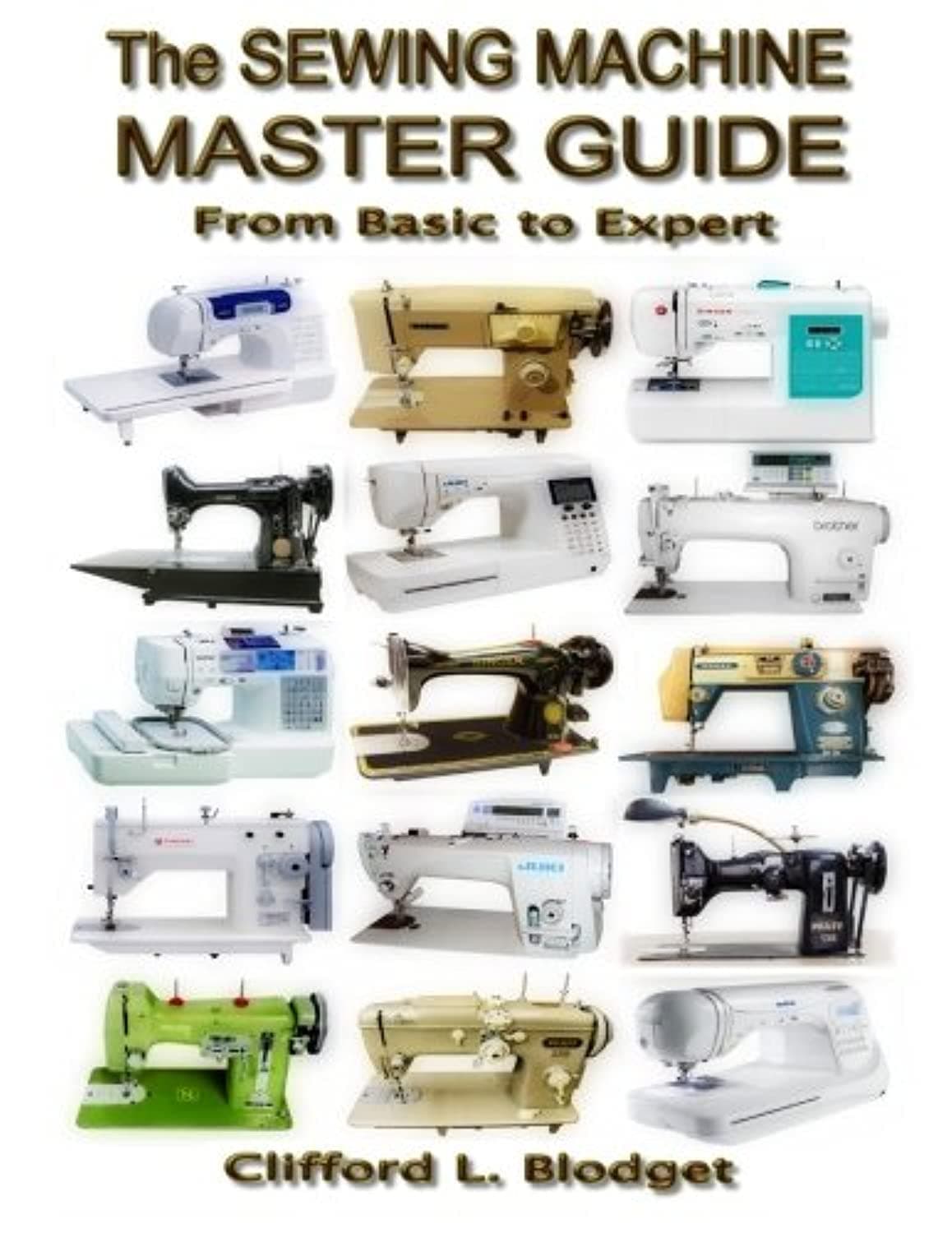
The Sewing Machine Master Guide: From Basic to Expert [Blodget, Clifford L] on desertcart.com. *FREE* shipping on qualifying offers. The Sewing Machine Master Guide: From Basic to Expert Review: Details on components and attachments were surprising - After buying an older industrial Pfaff, I was curious to see if I could get a ruffle attachment for it. Most online sites either give you a picture and nothing else or show a leaflet that comes with them, no usable description. This book shows the YS Star model I was considering and sure enough, there is both an domestic and industrial model. Had I purchased one on eBay and it was domestic, I would NOT have been happy. They aren't cheap, either. This is why a book like this is helpful. The various types of industrials are explained. Anyone who is doing a bit of upholstery or leather work will get some guidance on walking foot models. Clutch and servo motors are important considerations if your serious about a more industrial machine as well. Fabrics, stitch formation (coverstitch machine anyone?), basic repair tools, adjusting bobbins cases and bobbins sizes explained. I was also glad to see a number of vintage Morse and other Japanese domestic machines. I should mention here that at least some Morse models were made by Toyota. Maybe not the cache of better known names but workhorse nonetheless. It never occurred to me bobbins could be warped or burred, something else I got from the book. It's a good way to kick tires so to speak if you're considered adding to your herd, an upgrade or just starting out. It beats having to return something that wasn't a good fit or performer for your needs. You'll appreciate the fact there isn't any talking down or a ton of techno speak. When you consider most machine showrooms (particularly industrial models) are far and few in between and with a heavier emphasis on vacuum cleaners where domestic machines are sold, a book like this bridge a gap. Good, clear pictures were also a plus. Review: the best single source on troubleshooting and fixing your machine - If you maintain your own machine, you need this book. Clear writing, useful troubleshooting and adjustments with excellent illustrations. This is the "missing manual" that I wish I'd had twenty years ago. Essential tips for buying a new or used home or industrial machine. Contains both basic and advanced trouble shooting, tuning, and adjustments. Could it be better, perhaps, but there isn't another single source that is as helpful and comprehensive. It does show photos of wedge shaped mechanics screwdrivers that I don't use. Instead get a set of hollow ground bits where the sides of the blade are parallel to avoid damaging screws.
| Best Sellers Rank | #283,302 in Books ( See Top 100 in Books ) #515 in Sewing (Books) |
| Customer Reviews | 4.5 4.5 out of 5 stars (658) |
| Dimensions | 8.5 x 0.77 x 11 inches |
| ISBN-10 | 0990022722 |
| ISBN-13 | 978-0990022725 |
| Item Weight | 1.74 pounds |
| Language | English |
| Print length | 338 pages |
| Publication date | September 24, 2013 |
| Publisher | Blodget Publishing, LLC. |
A**L
Details on components and attachments were surprising
After buying an older industrial Pfaff, I was curious to see if I could get a ruffle attachment for it. Most online sites either give you a picture and nothing else or show a leaflet that comes with them, no usable description. This book shows the YS Star model I was considering and sure enough, there is both an domestic and industrial model. Had I purchased one on eBay and it was domestic, I would NOT have been happy. They aren't cheap, either. This is why a book like this is helpful. The various types of industrials are explained. Anyone who is doing a bit of upholstery or leather work will get some guidance on walking foot models. Clutch and servo motors are important considerations if your serious about a more industrial machine as well. Fabrics, stitch formation (coverstitch machine anyone?), basic repair tools, adjusting bobbins cases and bobbins sizes explained. I was also glad to see a number of vintage Morse and other Japanese domestic machines. I should mention here that at least some Morse models were made by Toyota. Maybe not the cache of better known names but workhorse nonetheless. It never occurred to me bobbins could be warped or burred, something else I got from the book. It's a good way to kick tires so to speak if you're considered adding to your herd, an upgrade or just starting out. It beats having to return something that wasn't a good fit or performer for your needs. You'll appreciate the fact there isn't any talking down or a ton of techno speak. When you consider most machine showrooms (particularly industrial models) are far and few in between and with a heavier emphasis on vacuum cleaners where domestic machines are sold, a book like this bridge a gap. Good, clear pictures were also a plus.
X**X
the best single source on troubleshooting and fixing your machine
If you maintain your own machine, you need this book. Clear writing, useful troubleshooting and adjustments with excellent illustrations. This is the "missing manual" that I wish I'd had twenty years ago. Essential tips for buying a new or used home or industrial machine. Contains both basic and advanced trouble shooting, tuning, and adjustments. Could it be better, perhaps, but there isn't another single source that is as helpful and comprehensive. It does show photos of wedge shaped mechanics screwdrivers that I don't use. Instead get a set of hollow ground bits where the sides of the blade are parallel to avoid damaging screws.
R**N
Want to give it 5/5, but has some issues
This is a well written and informative book that has been almost perfect for filling in my knowledge gaps after five months researching and buying several domestic and industrial sewing machines, but my copy of the book has some issues— Specifically, there are large, blank spaces on numerous pages instead of an image or diagram referred to in the text, leaving me to wonder if the images were completely deleted during printing or if they have been shifted to another page or something, or both. If it’s just a formatting error, then it’s an annoyance and I’ll eventually make sense of it after further study and review; if diagrams and photographs have actually gone completely missing, then I didn’t receive the publication promised and will be rather disappointed, because the writing is competent and the information is relevant, only I’m left with an end product that is not as the author intended. At best, it’s a waste of paper printing a book with so much white space between paragraphs. When I get a few extra minutes while I have the book handy, I’ll snap a few photos so potential readers as well as the author and publisher can see (and hopefully correct) what I’m describing. That said, I still recommend this book and only wish I received a copy with less imperfections.
T**R
Excellent Introduction to Sewing Machines; Also a great shopping aid
This book is great for the person just starting out in sewing and wanting to decide which machine to get, as it has a huge list of models descriptions with the pros and cons of each. Blodget's not in the pay of any sewing machine manufacturer so he tells it like it is. Its information is extensive enough to also suit the professional tailor or sewing-business-person. It also has an extensive maintenance and repair how-to section. Blodget tells how a sewing machine works (it's quite ingenious), which helps you be an informed user of it (how not to break or jam it). He also has a section on the various kinds of stitches (did you know there are actual international standards for them?) There's a short section on "how to use the sewing machine" -- this is actually very brief and basic. This book is: An in-depth information guide to sewing machines themselves This book is not: An in-depth guide on how to sew various kinds of articles. You will want to get another book for actual sewing and tailoring techniques.
A**G
Thank You!!! (where have you been all my life?)
The author of this amazing book (published in 2013) has written an easy to understand Master Guide. For decades I had to take my machines to the sewing repair shop and spend lots of money for resetting the timing, mostly. This book has many pictures and adequate information about various types of machines and how to take care of them and fix them when I haven't. I have domestic and commercial machines and there is information for all of the different types. I haven't had time to read the entire book, but just thumbing through it I know it was money well spent. There are many resources and websites in the back pages.
J**C
pas pour les non-initiés mais excellente info des généralités concernantes des machines à coudre not for the fainthearted beginner - but it is excellent information for the different machines you can buy
V**C
Ottimo testo per uso generico e manutenzione della macchina da cucire. Sembra quasi un testo da meccanico. Spiega bene funzionamento è differenza tra modelli e tipi. Inoltre va molto a fondo sulla manutenzione. Non si può considerare un testo di taglio e cucito, in quanto si concentra prevalentemente sulla macchina. Ottimo per sviscerarne gli "inner working"
B**S
Ótimo!
J**.
*Como contras: -Fotos en blanco y negro -Viene a ser un Kindle imprimido casi directamente lo que hace que desluzca -Enfocado al mercado americano -Esta en ingles y no todo el mundo lo podra disfrutar *A favor: TODO EL RESTO !!!! -Opinion practicamente imparcial del mercado de las maquinas de coser, tanto caseras como industriales, diciendo claramente por lo que merece la pena pagar y por lo que no. Se nota que el autor es un consumidor y no un comercial. -Describe pormenorizadamente las partes que componen la maquina de coser, su funcionamiento, las variedades (por ejemplo, lanzadera horizontal y vertical) con sus ventajas e inconvenientes, tipos de prensatelas,... -Trucos sobre calibrar la tension, que tipo de hilo usar, agujas, telas,... -Mantenimiento de las maquinas de coser -Historia de las maquinas de coser con modelos ampliamente vendidos (mercado americano, recordemos, nada de ALFA o similares) Ojala se hicieran mas libros como este con opiniones imparciales (con las que podras estar de acuerdo o no pero imparciales al fin y al cabo) en los que se demuestra que no por gastarte mas dinero en una maquina de coser tienes porque hacer una mejor compra.
E**G
Even though this is a vanity published book my goodness it contains a lot of information and frankly I can't see why a publisher wouldn't want it. It's enabled me to move from being a sewing machine owner who can do a basic clean up and service to someone who can identify and fix quite a lot of other problems too. The most useful advice it contains is on doing easy and deep servicing on your machine and with this info you may find you never again need to pay to have a machine serviced. I've certainly fixed my own and other people's basic problems, such as tension instability with the help of this book. It doesn't completely negate the need for a sewing machine engineer but it will certainly save you money every time the tension on your machine becomes unstable and cannot be fixed using the tension dial. Frankly, tension problems hardly ever have anything to do with upper or lower thread tension (unless you've just bought a new bobbin case) and moving the tension dial hardly ever fixed anything either. On the other hand keeping your machine lint free, changing needles regularly and making sure to use the same manufacturers threads (of the same weight) in both bobbin and upper thread will solve a lot of very common problems. Anything that cannot be solved by the above good practice is probably covered in this extremely useful book.
Trustpilot
Hace 1 mes
Hace 1 día