We remain fully operational. Our teams are working around the clock to ensure your deliveries continue safely.

Descargar la aplicación


Servicios al cliente
Sobre nosotros
Copyright © 2025 Desertcart Holdings Limited
Descargar la aplicación

Buy anything from 5,000+ international stores. One checkout price. No surprise fees. Join 2M+ shoppers on Desertcart.
Desertcart purchases this item on your behalf and handles shipping, customs, and support to Ecuador.
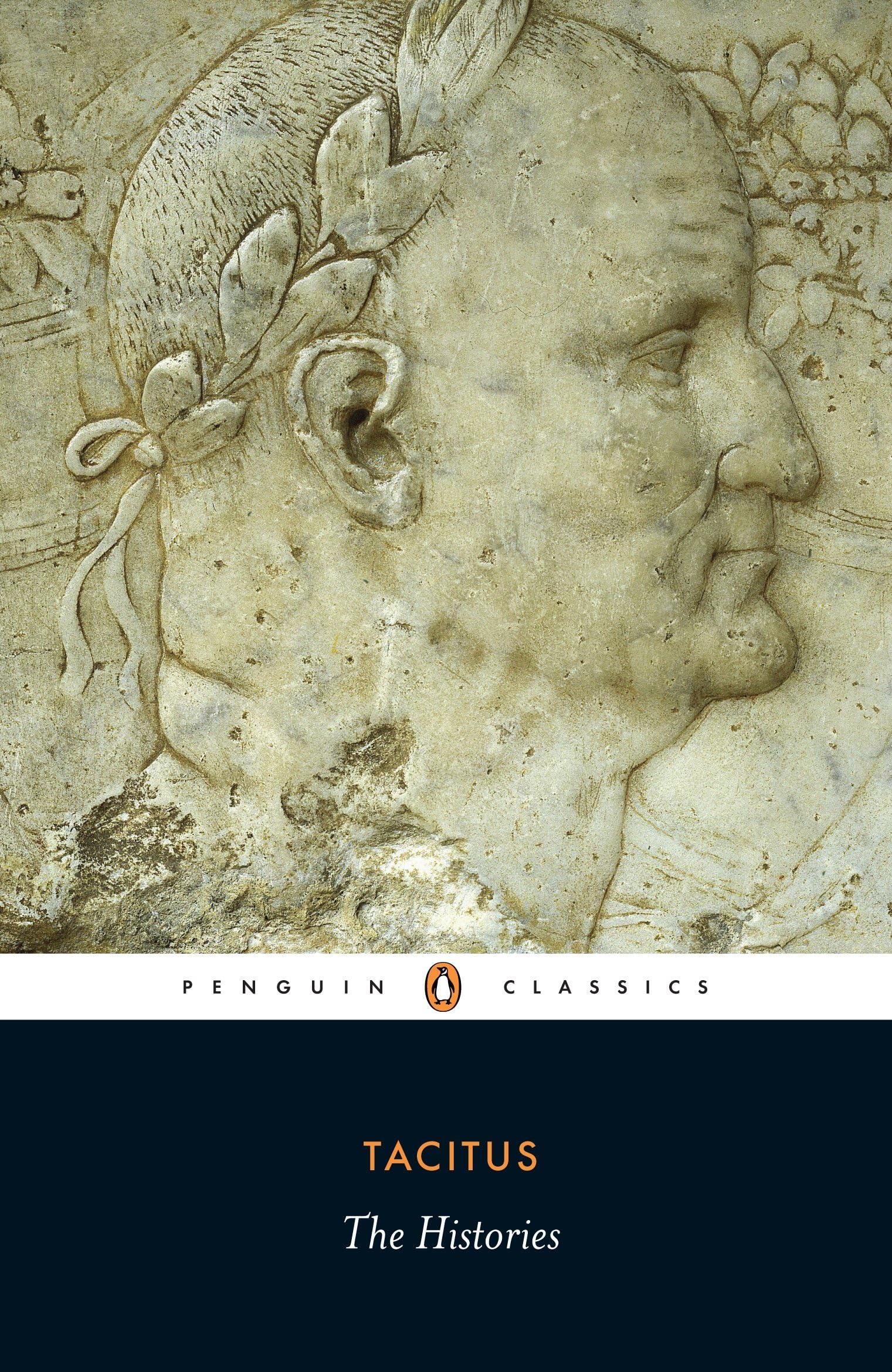
The Histories (Penguin Classics) [Tacitus, Wellesley, Kenneth, Ash, Rhiannon, Ash, Rhiannon] on desertcart.com. *FREE* shipping on qualifying offers. The Histories (Penguin Classics) Review: Transitions in power... - Tacitus was one of the preeminent historians of the ancient world. He wrote several works, but only a couple of them have survived, and even these have fragments missing. "The Histories" primarily concerns one year of the Roman Empire: 69 AD. In that year, the empire would have four emperors: Galba, Otho, Vittelius, and Vespasian. The first three would come to "untimely ends." Otho would committee suicide, the other two were murdered. Vespasian would rule for 10 years, die of natural causes, and we succeeded by his son, Titus. It was Nero's suicide (yes, the infamous Nero, of watching Rome burn fame) in 68 AD, without a ready heir-apparent, that precipitated this year-long fight for succession that was in reality a civil war within the empire. Each of the contenders had their own geographic power base, with shifting alliances on the part of other players. Vittelius was in the Germanic area; Vespasian was most recently based in the area now called the Middle East: Judaea and Syria. It was a very bloody transition, both for the "principals," as indicated earlier, as well as the foot soldier, who died in their thousands. Overall, though there sure was much injustice in the infamous "hanging chads" as well as a Supreme Court decision, Tacitus' account makes one appreciate a non-bloody transition. Tacitus was a Roman senator who wrote this account over 30 years after the events occurred. Thus, much had become "received wisdom." He includes certain speeches, verbatim. He admits to owing his position to the Vespasians', who were enemies of Vittelius, so in his rather scathing account of the later, it helps to keep that in mind. With those caveats aside, I sensed that he was an acute observer in how power was sought and utilized, and the many follies associated with it. He does an excellent job of tracking the changing political alliances, along with summarizing the motivations of the principal characters. In addition to the politics, there is much military history, with the names and leadership of the various legions that took part in battles. Tacitus assumes that the reader knows the military nomenclature and tactics of the time, and thus the modern reader may need to familiarize oneself with these, from a separate source. The most detailed battle accounts were of two different battles, each occurring essentially at the same place, Bedriacum, in northern Italy. Vittelius was the winner in the first one, and the loser in the second, both fought within six months of each other. (It recalled other multiple battles over the same place, for example Bull Run in the American Civil War, or Ypres, in the First World War.) One aspect of the fighting that I found surprising was how, in a civil war, Roman soldiers would treat Roman civilians as suitable targets for looting and raping (it just seemed to be part of the game.) Furthermore, in terms of brutality and callousness, Tacitus states that Hannibal insisted that the Romans who died in the bloody battle of Cannae in 216 BC be buried. In this Civil War of 69 AD, Romans let other Romans rot on the battlefield. And in terms of "fragging their own officers," an expression from a much later war, it was also telling how often the troops revolted, and killed their own generals. The last section covers the Roman war against the Jews, in 70 AD, which included the destruction of the Jewish temple in Jerusalem. The victorious Roman general was Titus, son of Vespasian, who would go on to become emperor in his own right, when his father died (of natural causes!) For the modern reader, Tacitus' perspective can be somewhat jarring. Judea was just one more area on the borders of the expanding empire that needed to be "pacified." It was filled with cantankerous natives involved in customs and practices that did not conform with the norm of the empire, and were therefore "aberrant." I cannot read Latin, and therefore cannot vouch for the accuracy of the translation. I note at least one other review which challenges it though. But I do think that Kenneth Wellesley has produced a most readable and understandable version for the modern reader. And there are four excellent maps that I found myself constantly referring to, as well as 50 pages of notes designed to assist the modern reader who is not intimately familiar with the period. It was a great read, with numerous points on power, its use, and the transition of same between one group and another, valid for today. 5-stars. Review: Great deal. - Good stuff!
| Best Sellers Rank | #544,521 in Books ( See Top 100 in Books ) #55 in Classic Roman Literature #298 in Ancient & Classical Literature #10,460 in Classic Literature & Fiction |
| Customer Reviews | 4.7 4.7 out of 5 stars (129) |
| Dimensions | 7.74 x 5.14 x 0.93 inches |
| Edition | Revised |
| ISBN-10 | 0140449647 |
| ISBN-13 | 978-0140449648 |
| Item Weight | 9.9 ounces |
| Language | English |
| Print length | 384 pages |
| Publication date | August 25, 2009 |
| Publisher | Penguin Classics |
| Reading age | 18 years and up |
J**I
Transitions in power...
Tacitus was one of the preeminent historians of the ancient world. He wrote several works, but only a couple of them have survived, and even these have fragments missing. "The Histories" primarily concerns one year of the Roman Empire: 69 AD. In that year, the empire would have four emperors: Galba, Otho, Vittelius, and Vespasian. The first three would come to "untimely ends." Otho would committee suicide, the other two were murdered. Vespasian would rule for 10 years, die of natural causes, and we succeeded by his son, Titus. It was Nero's suicide (yes, the infamous Nero, of watching Rome burn fame) in 68 AD, without a ready heir-apparent, that precipitated this year-long fight for succession that was in reality a civil war within the empire. Each of the contenders had their own geographic power base, with shifting alliances on the part of other players. Vittelius was in the Germanic area; Vespasian was most recently based in the area now called the Middle East: Judaea and Syria. It was a very bloody transition, both for the "principals," as indicated earlier, as well as the foot soldier, who died in their thousands. Overall, though there sure was much injustice in the infamous "hanging chads" as well as a Supreme Court decision, Tacitus' account makes one appreciate a non-bloody transition. Tacitus was a Roman senator who wrote this account over 30 years after the events occurred. Thus, much had become "received wisdom." He includes certain speeches, verbatim. He admits to owing his position to the Vespasians', who were enemies of Vittelius, so in his rather scathing account of the later, it helps to keep that in mind. With those caveats aside, I sensed that he was an acute observer in how power was sought and utilized, and the many follies associated with it. He does an excellent job of tracking the changing political alliances, along with summarizing the motivations of the principal characters. In addition to the politics, there is much military history, with the names and leadership of the various legions that took part in battles. Tacitus assumes that the reader knows the military nomenclature and tactics of the time, and thus the modern reader may need to familiarize oneself with these, from a separate source. The most detailed battle accounts were of two different battles, each occurring essentially at the same place, Bedriacum, in northern Italy. Vittelius was the winner in the first one, and the loser in the second, both fought within six months of each other. (It recalled other multiple battles over the same place, for example Bull Run in the American Civil War, or Ypres, in the First World War.) One aspect of the fighting that I found surprising was how, in a civil war, Roman soldiers would treat Roman civilians as suitable targets for looting and raping (it just seemed to be part of the game.) Furthermore, in terms of brutality and callousness, Tacitus states that Hannibal insisted that the Romans who died in the bloody battle of Cannae in 216 BC be buried. In this Civil War of 69 AD, Romans let other Romans rot on the battlefield. And in terms of "fragging their own officers," an expression from a much later war, it was also telling how often the troops revolted, and killed their own generals. The last section covers the Roman war against the Jews, in 70 AD, which included the destruction of the Jewish temple in Jerusalem. The victorious Roman general was Titus, son of Vespasian, who would go on to become emperor in his own right, when his father died (of natural causes!) For the modern reader, Tacitus' perspective can be somewhat jarring. Judea was just one more area on the borders of the expanding empire that needed to be "pacified." It was filled with cantankerous natives involved in customs and practices that did not conform with the norm of the empire, and were therefore "aberrant." I cannot read Latin, and therefore cannot vouch for the accuracy of the translation. I note at least one other review which challenges it though. But I do think that Kenneth Wellesley has produced a most readable and understandable version for the modern reader. And there are four excellent maps that I found myself constantly referring to, as well as 50 pages of notes designed to assist the modern reader who is not intimately familiar with the period. It was a great read, with numerous points on power, its use, and the transition of same between one group and another, valid for today. 5-stars.
J**F
Great deal.
Good stuff!
D**T
Power, Paranoia, and the Price of Empire
Tacitus’ The Histories is not just some other read, it is a powerful and impactful one. This book takes a deep dive into the harsh and violent landscape of politics in Rome in the following years after the emperor Nero's death, narrowing in on the tumultuous “Year of the Four Emperors” in 69 AD. The thing that makes this book so memorable is not just the significance it holds historically, but its discussion of human nature. Tacitus is not just writing factual evidence, he is also writing and studying one's character, human ambitions, and corruption in the world with extreme accuracy. Tacitus was a Roman senator and historian himself, and his views are both political and personal, providing key insights and knowledge. Tacitus is doubtful of power as he is critical of many emperors like Galba, Vitellius, Otho, and even Vespian, a seemingly virtuous man. In his work, he provides vivid and almost cinematic writing complete with speeches, deceit, and dark themes. Although written in latin, a challenging language to translate, the English is still able to provide the emotions provoked from Tacitus’ keen words and ponderous tone. Some sections of his writing can be filled with names and navigating through politics but patience is key. Although this piece was written around 2,000 years ago, The Histories is formulated in a way where it feels particularly modern. Tacitus gives the reader warnings of unsupervised power, false loyalties, and manipulation, all issues significantly relevant in the modern day with the media and political matters. This gives his book a purpose of more than just telling history, it also serves as a story of warning. The only complaint I have with this book is that the books now are somewhat incomplete, leaving us with irritating holes in the storyline. Despite this, the remaining writing is beautifully articulated and extremely relevant in modern day society. If you have any interest in Rome and its history or want an eye-opening dive into the collapse of politics from someone who lived right in it, this book is for you.
M**E
A Vivid Glimpse into Roman Politics
This is a gripping look at a most chaotic year for the Roman Empire. Tacitus presents vivid depictions not only of the major claimants to the Imperial throne but also the subordinates who schemed and plotted with them. Best of all, perhaps, are Tacitus's trenchant observations on how people react to power. This is a very good window into the ancient Roman mind.
V**E
Good look at an interesting year
4 rulers in Rome during a period of a year. Interesting times indeed. The more things change, the more they stay the same. The authors insight is every bit as applicable today as 2000 years ago. Humans haven't changed a bit.
S**B
The histories
Decided to go back into old classics to read. Thus fills the bill. Enjoying it and will I’m sure reread it again when I’m through.
S**E
Five Stars
History of the White man before it was evil to be one
T**.
Easy to read classic
K**X
As usual with primary sources, I'm reviewing this particular edition, not Tacitus as a historian. That is the sort of thing best left to academic journals. Penguin has produced a good edition of Tacitus' 'Histories' which details the events of 69/70 AD, the so-called "Year of Four Emperors". It picks up after the death of Nero with Galba in Rome. Although most of the events surrounding the brief rise of Vindex in Gaul are absent, they were presumably discussed in the now-lost end to Tacitus 'Annals'. Having no experience with Tacitus in Latin, I have little to say about the translation. However, Wellesley's rendition of the military narratives is much better than Grant's terminology in the Tacitus' 'Annals'. In this case, terminology is far more specific and direct from the Latin, compared to Grant's poor choices of anachronistic military terminology like "regiment" or "battalion". Wellesley is not afraid to use a term like "lictor". This makes the military aspects of Wellesley's translation actually useful, unlike Grant's which are completely useless and require reference to the Latin text. The notes are also quite good, and far more significant than those in most Penguin editions. There are almost 50 pages of end notes, which is quite a feat for such a cheap and easily-available translation. The maps are also quite good, and once again, the fact that there are several and that they are customized for this work is a definite plus. The maps take pains to point out particular locations that are referenced by Tacitus, so they are extremely useful. There are glossaries of people and places at the end, as well as an index of proper names. The lack of a proper index of topics does not impress me, but the support materials in this book are exceptional for a Penguin, and so they cover it up.
A**R
very good
V**V
My grandson is very happy.
S**N
It's a book that contains words written by Tacitus. Well, some of them, because despite the minor miracle of what words remain surviving, not all.of them did. So if you want to know what Julie's Civilis did after the bridge, you'll just have to make up for yourself. Having said that, it's a remarkably easy read and full of bite-sized nuggets of historical gossip that doesn't usually get into the regular history books, so there's a whole cast of characters I wasn't familiar with. A cracking good read, even if you aren't necessarily into Roman history (and if your not 1. What's wrong with you; and 2. Why are you reading reviews about Roman history books). There political intrigue, murder, sexual shenanigans, day to day gossip.about the great and mighty and much, much more. Pulp fiction that happens to be true history, though all history is subjective, so take it with a pinch of salt and bookmark the footnotes as they help give some context.
Trustpilot
Hace 2 semanas
Hace 1 semana