Some deliveries may take a little longer than usual due to regional shipping conditions.

Descargar la aplicación


Servicios al cliente
Sobre nosotros
Copyright © 2025 Desertcart Holdings Limited
Descargar la aplicación
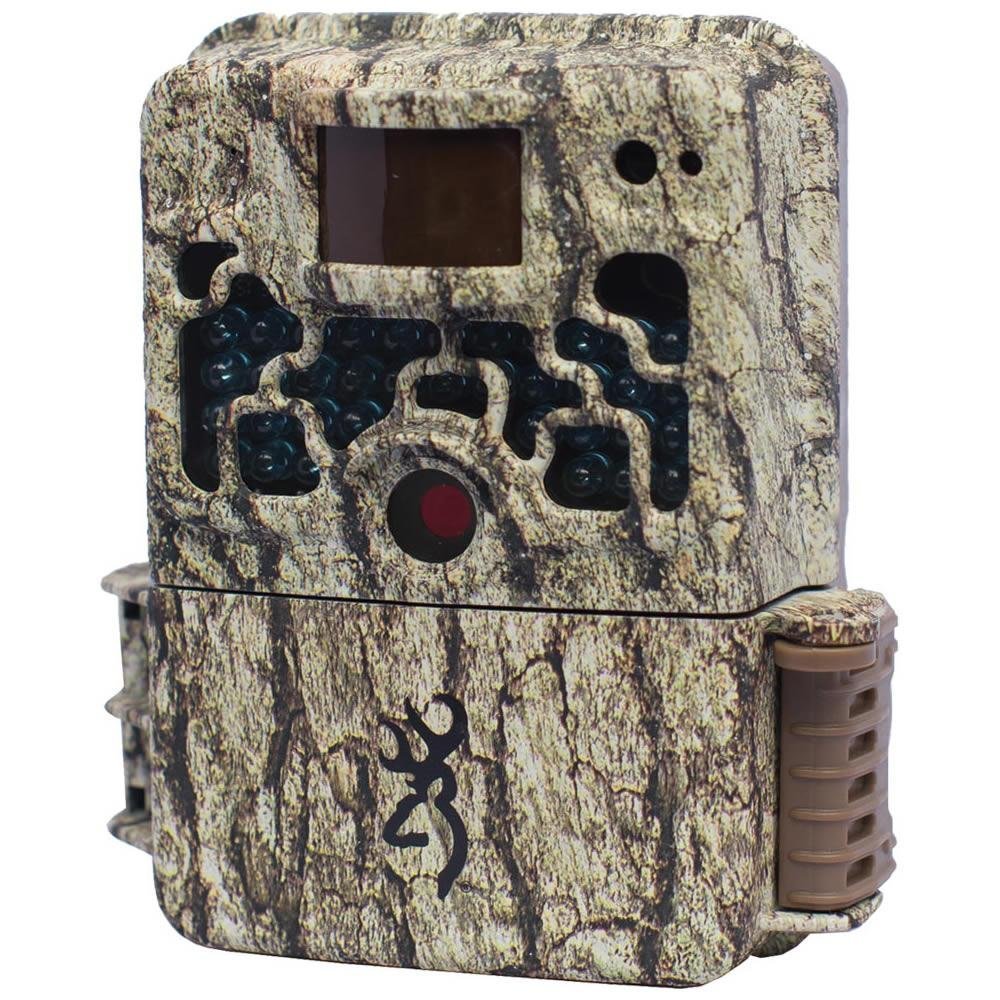

📸 Capture the Wild Like Never Before!
The Browning Strike Force HD Camera in camouflage is designed for outdoor enthusiasts, featuring a rapid 0.67-second trigger time, HD video recording capabilities, and a robust battery life powered by 6 AA batteries. With a 100-foot flash range and included time-lapse software, this camera is perfect for capturing wildlife in stunning detail.
G**E
Highest Ranked Trail Cam on the Market for 2014 (Still Going Strong in 2016)
UPDATE 2/5/16 - I wanted to update this review, since my issue mentioned later in my original review has been has been completely resolved. Although the battery issue, described later in the review, was actually with my similar Browning Dark Ops model, Browning's superb customer service will apply to either model. I mailed my camera to Browning Trail Camera's service center. Incidentally, I was happy to see that their service center is in Tennessee. Even though my camera was technically past the one year warranty date by almost two months, they immediately sent me back a brand new (still in the packaging) Dark Ops. I had a brand new camera within two weeks of mailing it them. I guess since I contacted them and explained the issue had started months before (but took a while to ensure it was the camera and not bad batteries), they fully warrantied the camera. It is very refreshing to deal with a company that stands behind their product. Browning is two for two in my experiences with their customer service. I am incredibly pleased. They have ensured they have a loyal customer in me. I have no reservations recommending either the Strike Force or the Dark Ops models.ORIGINAL REVIEW - I did quite a bit of research, including internet and speaking with experienced trail cam users, and this was by far the most highly recommended trail cam on the market. The Strike Force has essentially changed the market and price points for trail cams, as when Browning debuted this trail cam it had features available only in the $300 price point range. The trail cam website test reviews I researched all had this camera ranked top five for overall performance, and at the top of the value for the $$ rankings. My biggest decision came down to deciding between the Strike Force, and the comparable Browning Dark Ops. (Note - for those debating the same quandary, I have recently purchased the Dark Ops model as well, and a comparison is discussed later in this review).Pro's1. Terrific Daytime Picture quality - actually captured a Bobcat on the run with incredible clarity.2. Fairly good IR flash range - Works well even in fairly thick timber3. Good Night Quality - Black & White night photos but the IR flash often highlights antler details4. Great Versatility & Options - The burst mode and timing adjustability are very handy5. Lightning fast trigger speed - one of the best on the market6. Great Detection Range7. Display for Battery Life & Remaining Photo Memory (Battery Life indicator does not work well with Li Batteries)8. Good Video Quality9. Great Battery Efficiency (begins to use more battery power over time - see comments regarding Dark Ops model below)10. Connection Port - Camera can be utilized as SD card reader by connecting USB cable (not included) to PC or TV.11. Really easy to use. Simple menu options.12. Responsive Customer Service (see comments regarding latch below)Con's (Not many, but if had to think of some...)1. Cheap plastic latch breaks easily. (Update - I emailed the customer service address on the Browning Trail Cam website, and they immediately sent me two replacement latches.)2. Motion Range is slightly wider than Camera view, so with a fast trigger speed you get some photos taken prior to the animal coming into frame. This really is not a problem for use over a feeder or mineral lick, as you might just get a couple of extra blank photos just before the animal comes into frame. For use on a travel trail, this might be more of a concern, and you will probably want to set up in burst mode to ensure you get a photo while the animal is in frame.3. IR Flash is visible - This is not necessarily a con, unless you plan to utilize for security purposes or if the cam is located in an area where potential thieves may notice the flash and attempt to steal the camera. (If either of the above mentioned are an issue, the Browning Dark Ops model has a black flash which is not visible).4. No Field Viewer - There is no viewer to preview photos in the field, or to check alignment (although for alignment purposes it does have a test mode which flashes as the camera detects motion within the detection area).5. USB cable is not included (digital camera connection on one end, USB connection to PC)Update 3/1/2015 Strike Force versus Dark Ops ComparisonAs promised, I am updating this review based on my experiences with the comparable Browning Dark Ops (Dark IR model). The Dark Ops has proven to be just as reliable as the Strike Force with the same easy to use features, and good battery efficiency. The night photos taken by the Dark Ops are necessarily somewhat darker with the dark IR flash, so the clarity level is slightly affected. Still the range for night photos for the Dark Ops, although slightly less than Strike Force, has been fairly impressive just the same. I have been able to positively identify specific bucks in night photos taken in medium density timber at ranges of at least 40 feet. The daytime clarity is terrific, and is virtually identical for both cameras. Now that the price point for the Dark Ops has fallen down to match the Strike Force, I would tend toward recommending that model due to the additional flexibility offered by dark flash technology (i.e. it can be used for security purposes and is less likely to be noticed by potential passers-by on hunting properties). Either way, you really can't go wrong with either camera. As an aside, I tend to capture more nighttime photos of both Coyotes and Bobcats with the Dark Ops model, so if you intend to use for predator scouting I would go for the dark IR flash model. Deer do not seem to be spooked by the visible IR flash, but predators do seem to spook, and I have video on the Strike Force of Coyotes turning and running as soon as the light comes on.Further update, I also have my first complaint about the Strike Force camera. The plastic latch on the Strike Force that seals the control buttons and protects the SD card slot from moisture snapped in half recently, while I was retrieving the SD card. (The Dark Ops model has an identical cheap plastic latch). I believe some other commenters have also complained about this same issue. It is certainly not enough of an issue to deter my purchase of another Browning once the need for another camera arises, but I certainly hope the manufacturer looks to correct this issue on future models. I advise users to be very careful when snapping the latch back closed, as it will shatter under a very modest amount of pressure. Update - I emailed the Browning Trail Camera customer service department and they immediately sent two replacement latches (so I now have a back up in case it happens again). The latch is extremely simple to replace, so in the end no harm, no foul.Dark Ops Update 1/11/16 - After approximately 8 months of use, my Dark Ops camera suddenly started severely declining in batter efficiency. It is only getting two weeks out of Li batteries using settings that would last for 2 months when the camera was new. I am now using rechargeable NiCad batteries and switching the batteries out every time I check the SD card (every 10-14 days). I have seen some slight decline in battery efficiency from the Strike Force, but nothing I would complain about. I am not sure if this issue is specific to a problem with my Dark ops camera, or whether this an appropriate contrast between the Dark Ops & Strike Force models. I will be contacting the manufacturer, and will update this review with a any relevant response.TipsHere are few tips for new users that I have picked up from my experience with this trail cam:1. Use Lithium batteries. Update 1/11/16 - I now recommend rechargeable NiCad batteries, unless you plan to leave the camera for extremely long intervals. During the first few months use, the camera was very efficient and Li worked great. As the camera gets older, Li becomes cost prohibitive. Li does last longer overall, but the NiCad will last a couple of weeks (or more) on trail cam mode, and obviously they are much more economical.2. Purchase two SD cards - that way you can quickly change out the card to go check the site activity without having to spend too much time in the area or having to return to disturb the area later to replace the card (and possibly missing activity in the interim). Unless you set burst mode and timing settings extremely liberally, an 8 GB card is plenty for checking most trail cam sites on 10 - 20 day intervals. I have a couple of 16GB SD cards, but even in video mode, 16 GB is pretty much overkill with correct delay settings.3. Use a lock or security box. I use a Master Lock Python cable (bolt cutters can cut through a Python lock but at least it prevents theft by the typical trespassing poacher). When setting up the camera, the Python cable is not required to secure to a tree, as a strap is included with the camera. The Python cable can be a bit aggravating, though, as the key mechanism can be persnickety and the keys will easily break off in the lock.4. Keep in mind the height range for the intended target when securing the camera, as a trail cam set at five foot from the ground is not going to catch many deer or turkeys, but a camera set too low will probably catch more squirrels that you want to see. I recommend a height of approximately 30 inches for deer (depending on the topography), and possibly slightly lower for turkeys. If you want photos of raccoons for some reason, don't worry about camera height because those curious little boogers will give you some extreme close ups as they try to figure out where that light is coming from.5. Settings - If you plan to set the camera up over an area that the animals may tend to linger, you probably want to minimize the burst mode to two photos (or don't use burst mode at all), and keep the delay duration at five minutes (or greater). On one occasion, I set the burst on 3 photos, with a one minute delay, and ended up with 2,000 photos in a week - which does pretty much guarantee you will have good shots of every animal that walked through, but makes for a long sorting process when trying to establish patterns. A two photo burst will capture most targets that were essentially just quickly walking by, and a five minute delay is pretty good timing for deer, which tend linger for a maximum of about twenty minutes in any single interval. I found the same settings work fairly well for wild turkeys, also, even though flocks tend to linger longer than deer will. For some reason, the camera is triggered more easily by mammals such as deer, raccoons, coyotes, dogs, and humans; than it is by wild turkeys. Most initial phots of mammals occur while the subject is barely in the frame, but many times a large portion of the turkey flock will already be in frame and fairly close to the camera when the initial photo is triggered. Predators like coyotes and (especially) bobcats are a bit trickier, and burst settings are helpful to ensure travelling subjects are captured in view.As an aside, there are several new web-based software applications coming on the market to help trail cam users garner useful pattern info from their trail cams. These applications allow users to select trail cam locations using GPS & aerial satellite photos, and upload photos from each cam site. The application then downloads local weather data for each site, and matches the photo time stamps with local weather conditions. Specific animals can be tagged by photo. This allows the application to utilize predictive algorithms to pattern a deer's movements and predict your most likely areas for success based on predicted or current weather (and moon phase) conditions. I have long complained about the significant gap between the information trail cams provide, and a simple way to fully utilize that information to determine the end means for most users (patternable deer movements). Hopefully, some of the trail cam manufacturers will key in on these new applications and begin to include this type of software with their cameras.
R**D
Good pictures; motion detection not as advertised
I bought a game cam primarily to use as a home security device. This model seemed to have lots of good reviews, and good specifications. I was impressed by the 100 foot detection range advertised. When delivered I immediately set it up on a tripod in order to test and familiarize myself with the performance, with the plan to buy at least on more. After about an hour of playing around with it I decided it had to go back. The actual motion detection capability proved to be a big disappointment. The detection range was approximately half of that advertised. I also discovered that the detection capability was very narrow. I also found that if I moved slowly rather than making quick abrupt movements, the detection was even worse. The photos and videos were great quality, but with such poor motion detection it won't matter. I tried making lots of adjustments, and tried using videos, but this is just not going to meet my needs. Maybe a great trail cam, but for home security forget it.
P**D
Browning set the Buckmark (er, benchmark)
I've had this camera for about two months now and have been quite impressed with its performance. I put it up at the same spot as a Primos Ultra 35, and the Strike Force blew it away with much sharper pictures, far better flash, and better detection range. In case you wondered, the Primos actually cost more than the Strike Force when it was purchased.The pictures on this camera are excellent. I only have the Primos to compare it to, but the 10 Megapixels show. It triggers fine out past 40 feet. The flash is definitely impressive. There is definitely enough light to see deer well at 50+ feet. This does have the consequence of whiting out deer that are less than 10 feet from the camera, but their outline is still very obvious. (It would be nice if the light was even, but I'm certainly willing to put up with the white out effect rather than trying to figure out how to hook up several remote flashes.)The detection circuit works reasonably well. There are relatively few empty shots (last time I checked the camera, all 50 pictures were of deer). It does detect right to the edge of the field of view, because I got a picture of just a deer's head as it walked in about 25 feet away.Battery life seems to be quite good, even if it does take just six AAs. I swapped my Eneloops after a month and 127 pictures, and when I recharged them, found that they still had over 85% capacity. (The Strike Force does have a built-in battery charge level indicator, but it is calibrated for 1.5V cells rather than 1.2V of the Eneloop NIMH cells.)The camera does flash a small red light when it takes a picture at night, and apparently deer see it (or hear something in the camera) because I have several pictures of deer looking right at the camera. However, I've gotten multiple shots of the same deer that looked at the camera from less than 15 feet away, so it doesn't seem to bother them. (I also have a Dark Ops, which is virtually the same camera with black flash [completely undetectable], but its flash range is not as good as the Strike Force, and I think I like the Strike Force bettter.)I wanted a very compact camera, and this is it. Setup is done via a small LCD screen and buttons, but it works quite well. Other cameras with slider switches, more buttons, etc. are easier to set up, but they are also larger.Browning has delivered a terrific product at a very reasonable price. I have not seen any other camera that will beat a Browning in performance per dollar. If you are looking for a trail camera that takes great pictures, night and day, has trigger response and recovery times beaten only by cameras at 3x the price, has a reliable detection circuit, reasonable battery life, is very compact, and is also affordable, you've found it. This has got to be one of the best values on the market currently. Unless somebody one-ups Browning in a hurry, my next camera will be a Browning, likely a Strike Force.
E**S
but compact with excellent battery life) it has performed much better than Spypoint ...
I selected it for its image quality (10 Mp) and battery life. I was pleasantly surprised that it also has a jack for a 12V external battery and can therefore be used with a deepcycle battery/solar panel. Given the expectations (no screen, but compact with excellent battery life) it has performed much better than Spypoint wildlife cams I tried. I have blanked out the sides and base of its detector to reduce the number of photographs (or blank video) to ensure the target species is well within the frame before it triggers the camera (one good photo is better than none at all for wary species). Composing the images for maximum results is a bit tricky without a viewscreen, but that is the trade-off for a compact trail camera. I have made my own peep sight by glueing a small cylindrical aperture to the back with a blade on the front to compose the image after installation (it also works from the front by providing two aiming points). Its menu is a bit awkward to navigate as the manual is not at all clear, so some experimentation with various settings before deploying the camera is recommended. I will be using it extensively in the Timelapse Plus mode, but its timelapse mode may be activated at various intervals after sunrise and stop before sunset, in which case overcast and dim conditions may affect activation. Forget about any night timelapse recording, e.g. moonrise, starscapes, night events, etc. Even in "All Day" mode it still ceases timelapse recording at sunset. It is robust and access to the menu and memory card from the front is a definite plus for servicing it in the field.
M**N
Poor customer service from Browning
Not all the features in the user guide seem to be available or easily accessed and I have had NO help from Browning despite emailing them - their customer support is very poor (actually it's non-existent!). The camera works OK but the red glow from the infra-red night illumination scares the wildlife away so only short videos of them are obtained, usually on the periphery of the photo frame - still shots get better results but the night time images are somewhat blurred. The camera is fine for daytime use as the infra-red illumination does not kick in to scare the animals and the sound feature is useful.If I was buying another such camera I would go for a 'black' illumination so as not to scare off the wildlife despite their range not being as good as a 'red' infra-red.Service and delivery from the German website was excellent especially as it was over the Xmas period.
C**S
Great camera
I've had one of these out in the field since early October and I can't be happier. Takes great pictures day and night and it is still running on the first set of batteries after about 400 pictures.Only thing I don't like about it is that you do get some empty pictures since the detection zone is wider than the picture zone. That said, with the fast trigger speed and recovery time I usually get pictures to accompany the empty pics, so it's not such a big deal in my experience.I've read about people complaining that it is difficult to remove the SD card and I can see that being an issue if you have big fingers, especially on a cold day. Mine are of average size and it does take more precise movements to get it out, so I can see it happening.All in all if I need another trail camera I'll be getting a Browning Strike Force.
E**H
Good little cam
No problems. Batteries hold up well. PHoto qualities are great. Fun to see who I share my trails with.
A**R
Five Stars
By far the best that I have purchased
Trustpilot
Hace 3 semanas
Hace 3 semanas