
Descargar la aplicación


Servicios al cliente
Sobre nosotros
Copyright © 2025 Desertcart Holdings Limited
Descargar la aplicación
Full description not available
G**R
Poet enjoying a renaissance?
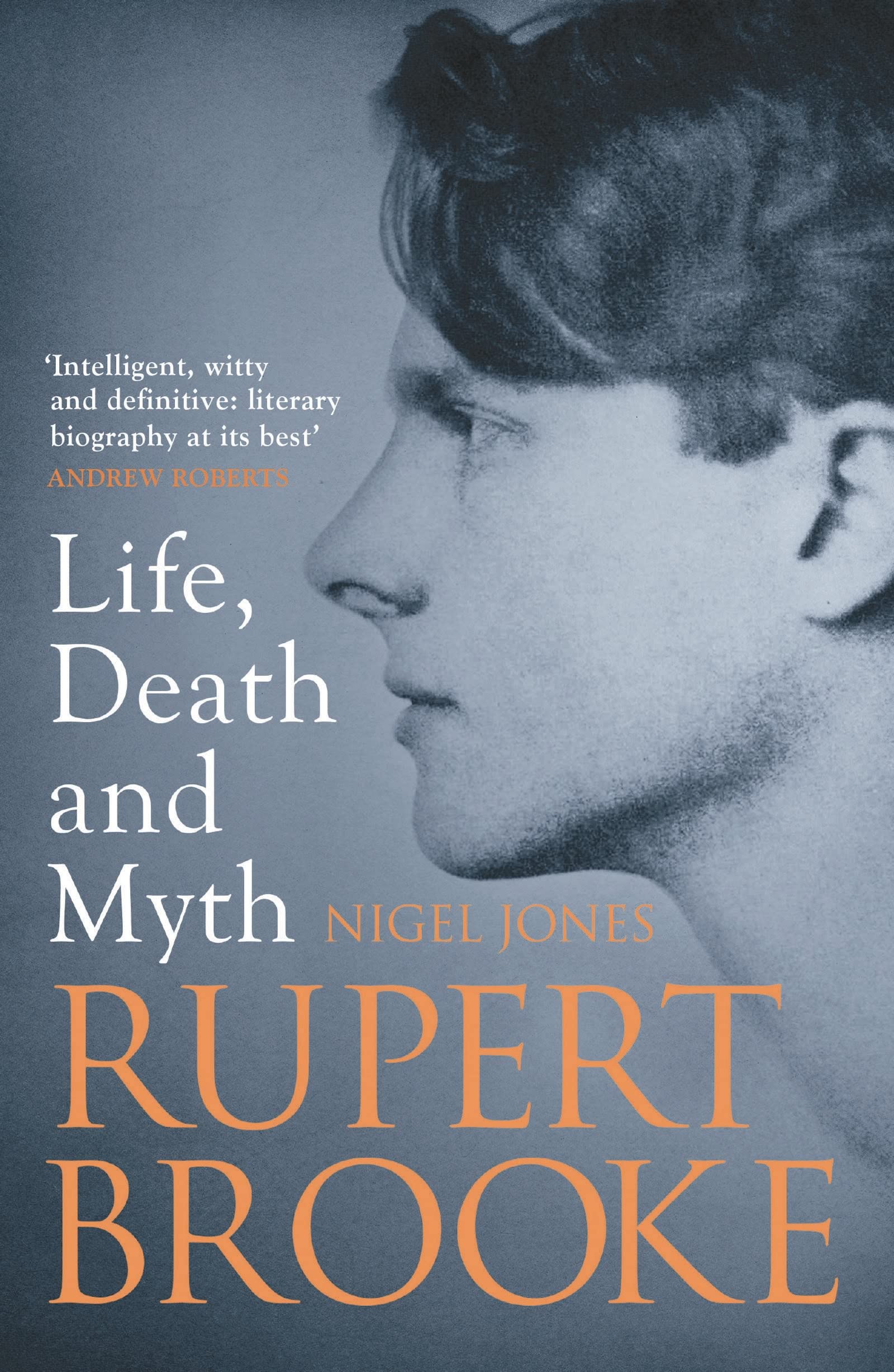
I love Rupert Brooke, I have loved him since I discovered him in my late teens. If he had lived beyond the age of 27 the literary world might have viewed him quite differently from the uber patriotic poet he is seen as. Even his most well known poem The Soldier is a much better poem than it would at first appear.This book is a real warts and all portrait and is all the better for it , Nigel Jones has done a great deal of research to give us a well rounded view of Rupert Brooke and contains some material which would have been hidden from view in a previous age. The only downside to the book is the paucity of photographs when a great many exist that would have better illustrated the text (maybe copyright issues?)Brooke was the golden young poet of his time , blessed with good looks and a magnetic personality but plagued with insecurities and doubts. He was beloved by a large group of friends which shines through in the text. I could go on, but read this for yourselves.
D**N
Excellent analysis of Brooke the man.
Until now I was only aware of the much sanitized and hagiographic biography by Christopher Hassall, this excellent bio digs way below the surface to reveal the true nature and personality of this still fascinating young man, so much a product of his age.
K**Y
More to Brooke than war sonnets
If you're an English teacher you've probably taught, and as a school pupil you've probably had to read, the obligatory WW1 poems - 'The Soldier', 'Dulce et decorum' etc. And maybe Brooke has come off worse as the patriotic, naive one who didn't know the reality of the trenches. So he and his work have been at worst, derided. For me, this biography placed the war sonnets in the overall context of his complex and difficult character, and of the milieau in which he had moved - to strip away some of the assumptions about him, confirm others, but to see the whole man and his work, 'warts and all'.The biography relies heavily on the letters, has lots of engaging detail - his swimming party piece is an anatomical feat - and occasionally frustrates with an assertion unsupported by reference, but is very readable throughout and will certainly challenge anyone who still sees Brooke as the National Treasure he was thought of at the time of his death.
A**R
All right
The author is sometimes rather tough on Brooke, but the book's main problem is that some typos already noted in the first edition have not been corrected.
C**Y
Five Stars
Great value
B**1
Five Stars
Superb.
A**R
wonderful marvellous!
Superb, wonderful marvellous!
D**L
Readable but one-dimensional
It is a mystery why a biographer should choose as his subject someone he rather dislikes and about whose poetry he is less than enthusiastic.Those who are talented and die young, especially whilst pursuing a cause, are particularly prone to becoming mythologised. Jones, a journalist and erstwhile UKIP parliamentary candidate, aims to demythologise him, a reasonable enough ambition. But the reality is that Jones seems to want to destroy completely Brooke’s reputation as a man and as a poet. One rare commentator quoted as speaking positively about Brooke is dismissed as a pub bore.Brooke was indeed a complicated individual, precocious, promiscuous, self-absorbed, but sensitive, creative and capable of inspiring great love and loyalty. In his relationships with women, he was inconstant, possibly out of fear resulting from his own ambivalent sexuality. It is significant that the woman to whom he was truest was Taatamata, unconnected with England or English society – and thus no threat? Throughout his life too, Brooke was concerned by thoughts of death, particularly his own.A more perceptive biographer could have made something of these contradictions.
Trustpilot
Hace 2 semanas
Hace 1 mes