Some deliveries may take a little longer than usual due to regional shipping conditions.

Descargar la aplicación


Servicios al cliente
Sobre nosotros
Copyright © 2025 Desertcart Holdings Limited
Descargar la aplicación
Full description not available
T**K
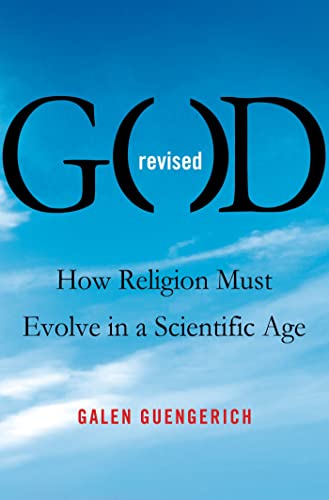
Innovative book outlines a way forward for liberal religion
I would class this as one of the best contemporary works on theology from a liberal religious perspective. Which might sound to some like faint praise, but there are other such books, some of which are quite good.There’s a lot in the book, but what particularly struck me as valuable was Guengerich's discussion, in his penultimate chapter, of the need to ground our ways of living in what he calls an “ethics of gratitude”. I read about an “ethics of gratitude” in a short sermon by Guengerich a few years ago, and my initial reaction was quite negative. Gratitude didn’t seem like a sufficiently rich emotion in which to ground a way of life. But I’ve changed my mind after reading this book, which spells out in more detail what Guengerich means.As Guengerich points out, the Greek work “ethics” refers to one’s “character” and how it shapes one’s actions by shaping one’s attitude towards the world. His “ethics of gratitude” is trying to respond to a challenge: how do we find an emotional underpinning for developing a character that makes us the “best we can be”, which in the original Greek understanding, would be becoming a person with “arête” (“having the specific excellence of a human being, virtuous”).As he describes it, the Christian approach to this question grounds ethics in love. And this is surely a good guide to right action. “Letting all that you do be done in love” is good advice.But the Christian approach is emotionally undergirded by the notion that some sort of more or less personal God loves you. Your character and actions of acting out of love towards others and the universe is supported by the notion that God loves you.I think the challenge that Guengerich is trying to address is how to support one’s ethical beliefs and behavior if it is no longer possible to believe in a personal God. (Guengerich still believes in a God, but it’s Spinoza’s God, a natural God, not a supernatural God.) If there is no personal God, then where is this love that supports one’s own character and actions?Guengerich’s alternative is gratitude. The universe/nature/the world may not personally love us, but we have reasons to be grateful towards it, anyway. Each of us is here by mere happenstance. It’s a miracle that the Big Bang occurred, that the various natural forces happened to be such as to make a long-lived universe with something other than hydrogen and helium possible, that intelligent life evolved on this planet, and that by chance each of us happened to be born.It’s also amazing that “the arc of the moral universe is long, but it tends towards justice”, the saying of Theodore Parker that was given prominence by Martin Luther King, Jr. This is the essential insight and accomplishment of the Enlightenment: it is now clear that there is progress in human development, and that the human species is evolving towards a future that is more prosperous, more enlightened and tolerant towards others, and less violent. Prior to the Renaissance and then the Enlightenment, human beings thought of history as being cycles going nowhere in particular, or maybe even deteriorating from some past “Golden Age”. It now seems more likely that we are evolving in a good direction, although not at a steady pace, and not without considerable pains.As Guengerich argues, we have reasons to be personally grateful that we are so fortunate as to live in this world. And if we are personally grateful for our good fortune, then this motivates us to want to share our good fortune with others, to try to do our part to move the world in the direction it seems best it go in, and to help all others as well as ourselves to develop the human potential that it seems we are so lucky to have.In other words, we can feel an emotional sense of personal gratitude and good fortune towards nature, the human world, our friends and family, and the entire universe, even if there is no personal God. And that emotional sense of being grateful for what is and the ideal towards where it seems to be headed can help support developing the character to live a more ethical life.
D**R
Proselytizing for Atheism
The prophetic religions of the West, the mystical religions of India, and the wisdom religions of China all believe a transcendent reality exists and that we can hope to be united to this transcendent reality after we die. Christians, Jews, and Muslims call the transcendent reality God and say our purpose in life is to serve God in this world in order to be with God after we die.While the author agrees that God exists, he does not believe in life after death. In this book he makes a number of statements to justify his lack of faith, all but one of which shows a lack of knowledge, understanding, and perhaps integrity.The good reason he gives for not believing in God is that God causes so much pain and suffering. This is evidence that God does not care about our welfare, and is a perfectly good reason not to believe. The following quote is utter nonsense:“Does our experience validate the Bible as the ultimate source of truth or call its traditional status as divine revelation into question? As we will discover, the question comes down to which comes first, belief or knowledge. Put more precisely, we’ll ask whether belief is a subset of knowledge or knowledge is a subset of belief.” (406)There are two kinds of knowledge: faith and reason. In reason, we know something is true because we can see the truth of it. In faith, we know something is true because God is telling us. The question is not the one stated by the author. The question is: Has God communicated to us that there is life after death? The author’s lengthy discussion of knowledge is just a way of avoiding a discussion of the reasons to believe God has communicated to us through the Bible. The author is not interested in such a discussion because he is proselytizing for atheism.The following quote is an example of how he misrepresents history and shows no understanding of the difference between faith and reason:“To be fair, many Christians take a dim view of creationism, insisting that the book of Genesis isn’t meant to be read scientifically. But what about, say, the virgin birth and resurrection of Jesus? When the testimony of the Bible contradicts what we conclude from the rest of our experience, we need to choose which takes precedence as the source of our most certain knowledge.”(597)The resurrection of Jesus is both an historical event and an object of faith. As an historical event, it refers to the renewed fellowship and religious experiences of the disciples of Jesus after the disappointment of the crucifixion. As an object of faith, it refers to the belief that Jesus is alive in a new life with God. The virgin birth is not an historical event at all but is entirely a matter of faith. By linking the two, the author is distorting the salvation history of mankind.This is a quote from an atheist that does discuss religion rationally. It differs from the author’s analysis because he admits that if life ends in the grave, it has no meaning."Thus the passion of man is the reverse of that of Christ, for man loses himself as man in order that God may be born. But the idea of God is contradictory and we lose ourselves in vain. Man is a useless passion." (Jean-Paul Sartre, Being and Nothingness: A Phenomenological Essay on Ontology, New York: Washington Square Press, p. 784).The author thinks that our purpose in life is what is sometimes called self-realization:"Human beings, in contrast, have the ability to develop character --- to fulfill our potential as human beings. Virtuous is to human as pungent is to pepper or sharp is to knife: it’s the state of being everything we can possibly be."(2345)This makes no sense at all because we can fulfill our potential in different ways. The problem of life is deciding how to fulfill our potential.
Trustpilot
Hace 1 día
Hace 4 días