We remain fully operational. Our teams are working around the clock to ensure your deliveries continue safely.

Descargar la aplicación


Servicios al cliente
Sobre nosotros
Copyright © 2025 Desertcart Holdings Limited
Descargar la aplicación
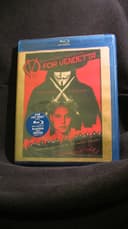
![V for Vendetta [Blu-ray]](/_next/image?url=https%3A%2F%2Fm.media-amazon.com%2Fimages%2FI%2F91HCREjdUZL.jpg&w=3840&q=75)
V for Vendetta (BD) Review: Enjoy the Extras on 2-disc Special Edition - INCREDIBLE Movie! - This is a review for "V For Vendetta - Two-Disc Special Edition", to give some information on the extras included with the movie. This is one of my family's favorite movies. It's exciting and it's stirring. Comic book but complex. Superbly filmed and acted, but then it had an amazing graphic novel to follow. Here's comments from participants in the DVD extras on this 2-disc Special Edition that echo my feelings about "V for Vendetta": Kevin Phipps, supervising art director: "You don't really know where you are, in terms of time. It's almost as if creativity has stopped." (extra #1) Daniel McTeigue, director: "I think it's a political thriller, first and foremost. It is in the superhero genre, but it's also a play on that convention." (Special Feature) John Hurt, who plays Adam Sutler: "The themes are serious. I'm not sure the treatment is as serious as that. But on the other hand, if it was as serious as that, I'm not sure that it would reach the amount of people that it's intended to reach." (Special Feature) Stephen Fry, who plays Dietrich: "This is a movie about a terrorist. The hero is a terrorist. It's a very good ethical point, because as we all know, one man's terrorist is another man's freedom fighter." (Special Feature) Indeed, though I root for "V", he is not perfect. He wants the populace to stir themselves, stand up for themselves, and take their government back. But not until after he's had his vengeance. DISC NUMBER ONE: 1. The movie. Spoken languages available are the original English and dubbed French. Subtitles available in English, French and Spanish. 2. Special Feature, 31 minutes: "Freedom Forever! Making V for Vendetta". This feature and extras 1, 2, and 3 were made at the same time. That is, when someone, such as the director, appears in more than one, you can tell that they were filmed at the same time. The extras compliment each other, rather than repeat each other. Interspersed with the interviews are film clips and production clips, too. Participants include James McTeigue, director, who says, "I was the assistant director on the Matrix films. To live in the Matrix world is to know the graphic novel world." DISC NUMBER TWO EXTRAS: 1. "Designing the Near Future", 9 minutes. Interesting stuff. The V mask was cast in fiberglass from a clay mold. It took the sculptor several tries. Most of the film was made at the Babelsberg Studio in Berlin. But there were crucial outdoor scenes that had to be filmed in England, such as at the end, where the mass of V's converge on Trafalgar Square on the 5th of November. It took 5 months to set up the 3 nights of filming; about 30 agencies/organizations had to give approval and/or co-ordinate. 2. "Remember Remember: Guy Fawkes and the Gunpowder Plot", 14 minutes. The history of the original gunpowder plot and how it's grown into an annual celebration in England. One interesting comment is by Sinead Cusack, who plays Delia Surridge. She was born in Dalkey, Ireland, and they have a different view of Guy Fawkes there. 3. "England Prevails: V for Vendetta and The New Wave in Comics", 24 minutes. This is about the comic book, or graphic novel. The camera-shy Alan Moore does not appear, but David Lloyd, who created the graphics for Moore's narrative, appears in several of the extras. Karen Berger, executive editor of Vertigo, DC's edgier more adult-oriented company says: "V for Vendetta is in a class of its own. It's a brilliant piece of work. It's a commentary on society. At the time it was written, there was absolutely nothing being done like that." The original comic book was published in black & white in England. Twenty-six issues were created before the publisher folded. Unfortunately, this was before V's story was finished! Both Alan Moore and David Lloyd were subsequently hired by DC comics, who saw the genius, and published a complete version of "V" in color. 4. Cat Power Montage. This is like a song video. Clips of the movie are shown while Cat Powers sings "I Found a Reason", from The Covers Album (2000) 5. Soundtrack album info 6. Theatrical trailer Happy Reader Review: Thus always to tyrants and oppression - fantastic movie - Having not read the graphic novel on which this movie is based, I cannot (and would not) debate the faithfulness of the adaptation or its relative worth. I also cannot divine what the Wachowski brothers' intent or motivations might have been, especially regarding the current political climate. I can only relate what I witnessed and experienced from the film alone as an isolated piece of art, and it was good... profoundly so. The film does not dabble with subtleties or nuances. The regime in charge of Britain is clearly oppressive. However they came to power and whatever their motivations (and the film ultimately reveals the back story), it is clear that they rejoice in their complete authority and enthusiastically abuse it. The field agents or Fingermen violate the citizenry; the televised face of the nation self-righteously revels in the judgment heaped upon other nations spewing smug vitriol; the religious leaders fulfill their carnal desires; the communications ministry controls all programming twisting the news to its own ends while eavesdropping on the general population; the Chancellor clearly rules through fear and with an iron fist. Dissidents are quickly and quietly disposed of through violent means. Free thought does not exist. This is an archetypal oppressive evil regime. V is the faceless archetypal hero. Happily he remains faceless for the duration of the movie. His mask is all we see. The lifeless mask allows for his thoughts and ideas to be the focus rather than his individuality. His appeal is not so much for how he handles a fight and a blade, though impressive; his true weapon is speech. Eloquent and literate, he expresses ideas that cut straight to the heart (the people should not fear their government, but the government should fear its people). Suspend belief for a period and watch as he shakes a sleeping nation. He chastises the citizens as the true culprits that have allowed the current state of affairs. Then he provides inspiration and a means to do something about it. We see the cowardly and zombie-like nation slowly awaken and climactically throw off its oppressor. This is not a "how-to" tool for overthrowing a dictatorship. Nor is it in my opinion a scathing indictment of any administration or specific political landscape in the first decade of the 21st century (though it will make you think about some things). Its power is in the universality of the tale. It resonates because it does not have to be political at all. It is about people and oppression and anyone finally standing up to throw off tyranny in any of its forms by whatever means. Certainly violence works well for a movie and to dramatically represent the point. But do not lock the greater meaning and power of the message into its form. Speaking of its universality, I was very much reminded of the musical "Les Miserables" (precursor to the French Revolution). It is a rousing tale where one sacrifices self-interest for the greater good. The cinematography is phenomenal with its stark colorization; it is a visually stunning film. The action is entertaining. A more rousing tune than the "1812 Overture" cannot be found. The film slows slightly while providing some back story, but it is necessary to fully inform the narrative. From start to finish, it is just a remarkable achievement.


| Contributor | Amelda Brown, Andy Rashleigh, Ben Miles, Charles Cork, Hugo Weaving, James McTeigue, John Hurt, John Ringham, John Standing, Natalie Portman, Richard Campbell, Rupert Graves, Sinéad Cusack, Stephen Fry, Stephen Rea, Tim Pigott-Smith Contributor Amelda Brown, Andy Rashleigh, Ben Miles, Charles Cork, Hugo Weaving, James McTeigue, John Hurt, John Ringham, John Standing, Natalie Portman, Richard Campbell, Rupert Graves, Sinéad Cusack, Stephen Fry, Stephen Rea, Tim Pigott-Smith See more |
| Customer Reviews | 4.7 out of 5 stars 6,246 Reviews |
| Format | AC-3, Blu-ray, Color, Dolby, Dubbed, NTSC, Subtitled, Widescreen |
| Genre | crime-action |
| Initial release date | 2008-05-20 |
| Language | English |
H**R
Enjoy the Extras on 2-disc Special Edition - INCREDIBLE Movie!
This is a review for "V For Vendetta - Two-Disc Special Edition", to give some information on the extras included with the movie. This is one of my family's favorite movies. It's exciting and it's stirring. Comic book but complex. Superbly filmed and acted, but then it had an amazing graphic novel to follow. Here's comments from participants in the DVD extras on this 2-disc Special Edition that echo my feelings about "V for Vendetta": Kevin Phipps, supervising art director: "You don't really know where you are, in terms of time. It's almost as if creativity has stopped." (extra #1) Daniel McTeigue, director: "I think it's a political thriller, first and foremost. It is in the superhero genre, but it's also a play on that convention." (Special Feature) John Hurt, who plays Adam Sutler: "The themes are serious. I'm not sure the treatment is as serious as that. But on the other hand, if it was as serious as that, I'm not sure that it would reach the amount of people that it's intended to reach." (Special Feature) Stephen Fry, who plays Dietrich: "This is a movie about a terrorist. The hero is a terrorist. It's a very good ethical point, because as we all know, one man's terrorist is another man's freedom fighter." (Special Feature) Indeed, though I root for "V", he is not perfect. He wants the populace to stir themselves, stand up for themselves, and take their government back. But not until after he's had his vengeance. DISC NUMBER ONE: 1. The movie. Spoken languages available are the original English and dubbed French. Subtitles available in English, French and Spanish. 2. Special Feature, 31 minutes: "Freedom Forever! Making V for Vendetta". This feature and extras 1, 2, and 3 were made at the same time. That is, when someone, such as the director, appears in more than one, you can tell that they were filmed at the same time. The extras compliment each other, rather than repeat each other. Interspersed with the interviews are film clips and production clips, too. Participants include James McTeigue, director, who says, "I was the assistant director on the Matrix films. To live in the Matrix world is to know the graphic novel world." DISC NUMBER TWO EXTRAS: 1. "Designing the Near Future", 9 minutes. Interesting stuff. The V mask was cast in fiberglass from a clay mold. It took the sculptor several tries. Most of the film was made at the Babelsberg Studio in Berlin. But there were crucial outdoor scenes that had to be filmed in England, such as at the end, where the mass of V's converge on Trafalgar Square on the 5th of November. It took 5 months to set up the 3 nights of filming; about 30 agencies/organizations had to give approval and/or co-ordinate. 2. "Remember Remember: Guy Fawkes and the Gunpowder Plot", 14 minutes. The history of the original gunpowder plot and how it's grown into an annual celebration in England. One interesting comment is by Sinead Cusack, who plays Delia Surridge. She was born in Dalkey, Ireland, and they have a different view of Guy Fawkes there. 3. "England Prevails: V for Vendetta and The New Wave in Comics", 24 minutes. This is about the comic book, or graphic novel. The camera-shy Alan Moore does not appear, but David Lloyd, who created the graphics for Moore's narrative, appears in several of the extras. Karen Berger, executive editor of Vertigo, DC's edgier more adult-oriented company says: "V for Vendetta is in a class of its own. It's a brilliant piece of work. It's a commentary on society. At the time it was written, there was absolutely nothing being done like that." The original comic book was published in black & white in England. Twenty-six issues were created before the publisher folded. Unfortunately, this was before V's story was finished! Both Alan Moore and David Lloyd were subsequently hired by DC comics, who saw the genius, and published a complete version of "V" in color. 4. Cat Power Montage. This is like a song video. Clips of the movie are shown while Cat Powers sings "I Found a Reason", from The Covers Album (2000) 5. Soundtrack album info 6. Theatrical trailer Happy Reader
K**N
Thus always to tyrants and oppression - fantastic movie
Having not read the graphic novel on which this movie is based, I cannot (and would not) debate the faithfulness of the adaptation or its relative worth. I also cannot divine what the Wachowski brothers' intent or motivations might have been, especially regarding the current political climate. I can only relate what I witnessed and experienced from the film alone as an isolated piece of art, and it was good... profoundly so. The film does not dabble with subtleties or nuances. The regime in charge of Britain is clearly oppressive. However they came to power and whatever their motivations (and the film ultimately reveals the back story), it is clear that they rejoice in their complete authority and enthusiastically abuse it. The field agents or Fingermen violate the citizenry; the televised face of the nation self-righteously revels in the judgment heaped upon other nations spewing smug vitriol; the religious leaders fulfill their carnal desires; the communications ministry controls all programming twisting the news to its own ends while eavesdropping on the general population; the Chancellor clearly rules through fear and with an iron fist. Dissidents are quickly and quietly disposed of through violent means. Free thought does not exist. This is an archetypal oppressive evil regime. V is the faceless archetypal hero. Happily he remains faceless for the duration of the movie. His mask is all we see. The lifeless mask allows for his thoughts and ideas to be the focus rather than his individuality. His appeal is not so much for how he handles a fight and a blade, though impressive; his true weapon is speech. Eloquent and literate, he expresses ideas that cut straight to the heart (the people should not fear their government, but the government should fear its people). Suspend belief for a period and watch as he shakes a sleeping nation. He chastises the citizens as the true culprits that have allowed the current state of affairs. Then he provides inspiration and a means to do something about it. We see the cowardly and zombie-like nation slowly awaken and climactically throw off its oppressor. This is not a "how-to" tool for overthrowing a dictatorship. Nor is it in my opinion a scathing indictment of any administration or specific political landscape in the first decade of the 21st century (though it will make you think about some things). Its power is in the universality of the tale. It resonates because it does not have to be political at all. It is about people and oppression and anyone finally standing up to throw off tyranny in any of its forms by whatever means. Certainly violence works well for a movie and to dramatically represent the point. But do not lock the greater meaning and power of the message into its form. Speaking of its universality, I was very much reminded of the musical "Les Miserables" (precursor to the French Revolution). It is a rousing tale where one sacrifices self-interest for the greater good. The cinematography is phenomenal with its stark colorization; it is a visually stunning film. The action is entertaining. A more rousing tune than the "1812 Overture" cannot be found. The film slows slightly while providing some back story, but it is necessary to fully inform the narrative. From start to finish, it is just a remarkable achievement.
Z**D
Not what I expected from the packaging
This film wasn't what I expected, from what I could glean of it from the cover picture and the blurb on the back of the case. I assumed V had a silent role, and that the film would be set somewhere in the former Communist eastern Europe. Once I watched it, however, I ended up getting much more than I bargained for. In short, this movie can be interpreted as a very stern warning to those who abuse power---and reminds us who gave them that power. John Hurt plays perfectly the megalomaniacal chancellor who is consumed by a desire to control everything in sight, and Natalie Portman does an excellent job of portraying Evey, who first regrets being caught up in the deadly game V plays with his former tormentors, but finally becomes his willing tool. I agree with some of the other reviewers that this movie has scenes which appear to be based on events in real life, as well as scenes from other movies. The analogy of the chancellor to Hitler is obvious, with the oversized symbol, marching before the platform, effective use of red and black to reinforce the propaganda effect, and the suggestion of a mentality meant to pervade all; the chancellor's chief servants eventually start to turn on each other, with disastrous results to his cabinet, a clear indictment of the infighting which shook the Bush administration to its core; the subway scene near the end, in which Portman cradles the dying V a la Luke Skywalker toward the end of "Return of the Jedi"; the ruling party's infuriation at being parodied, so reminiscent of Fidel Castro's ire toward the late cartoonist Antonio Prohias; the ending with thousands of extras which was based on an actual incident in the former Yugoslavia which resulted in the downfall of Milosevic's regime; and V's disguise, his chivalrous manner, and his expertise with blades, so reminiscent of Zorro. V reminds us in brutally graphic fashion why a gentleman should never hit a lady. The only thing absent from real life is the character who holds to account everyone who took part in the conspiracy which brought them to power; presumably, that is the greatest fear of some of our leaders who've failed us (and you know who you are). As for the plot, I found it easy to follow despite its complexity and the penchant which most British film makers seem to have for dwelling a little too much on drama. About the worst I can say of this movie, however, is that Hugo Weaving as V can be a bit of a motormouth, though an impressively prosy and witty one. We eventually realize that a number of elements are introduced into the plot as it progresses, but the makers of this film do a good job of tying up all the loose ends and bringing the bouquet together, as the villainous party members take to feuding with each other as V picks them off one by one... except for the last, who finds out the hard way what it will be like to live in a changed world in which he is stripped of his power. Can you say "emotionally castrating"? The crowning virtue of this film is the question of V's true identity. We realize at the end that the question is a moot point, but we still want to see the man behind the mask. But then, V wouldn't want me to spoil the ending, now would he? I fully recommend this film. Control freaks will find it traumatizing, but I daresay the rest of us will find it well worth the price.
T**N
V is for Victory!
Yes, "V" is for Victory. And the victory here celebrated is the triumph of the individual over the state. This is the essential and overwhelmingly powerful message of this most important film. The movie is set in a futuristic London when a fascist government has seized power. "V" is the shadowy anti-hero who, tortured and disfigured by totalitarian government agents, launches his own program of retribution, brilliantly begun on Guy Fawkes Day, the anniversary of history's first "false flag" operation, and played out to the strains of the magnificent "1812 overture". In an early scene, a beautiful young woman, stranded after mandatory curfew, is about to be set upon by tyrannical government agents. "V" comes on the scene, saves her, roughs up the government thugs, shelters her, and reveals to her his fascinating secret life, all the while hid behind his enigmatic "Guy Fawkes mask". His story is compelling. He is the perfect anti-hero. And yet, the young woman can't accept the brutality of his vendetta, until she herself experiences the evil of the government's torture regime. In time, the romance that develops between the young girl, played brilliantly by Natalie Portman, and "V" is as wonderful as is the movie's terribly important philosophical message. Also, early in the film, the Rush Limbaugh figure of the government controlled television station is seen watching his own ranting relative to the now devastated former United States of America and bragging as to what he would do if he ever got his hands on the "terrorist V". Of course, the lights in his luxury abode go low, and then, who should appear, but "V". It is positively delicious. "V" always leaves a red rose at the conclusion of his grisly work. As the plot unfolds, the working class stiffs of the fascist state begin to see more clearly through the government propganda they have been "spoon fed" through the media. "V" plans a final climax on, of course, Guy Fawkes Day, a year following the beginning of the action. There is much truly amazing and terribly important historical significane built into this outstanding screen play. The beginning scene describes the false flag operation of the "Gunpowder Plot" used ever since to offer a rationale for ever increasing government control of the populace. And the climax, the actual destruction of the Parliament drips with historical and politica significance. In English history, it was the triumph of the oligarchy, represented by the Parliament, over the popular monarchy that represented the enthronement of the money power and the crushing of indiviudal freedom. It is the cry of freedom that screams out throughout this wonderful and truly amazing movie. No wonder neoconservative Trotskyite apologists like Michael Medved hate this film so much. It is the articulation of the argument of individual freedom and morality against the crushing power of the state. A more important message than this has never emerged from Hollywood. In your face, Michael Medved! The final scene is breathtaking. See it. And keep in mind "V's" admonition: "Remember, remember, the fifth of November, Gunpowder, treason, and plot I can think of no reason that gunpowder treason Should ever be forgot". This is truly one of the greatest movies of all time!
C**E
Great movie
Go listen to Give Me Back My Action Movies podcast to hear the guys talk about the movie. My personal opinion is that it was a great movie!
T**K
V for Vendetta (Blu-ray)
Movie - 4.5 V for Vendetta strikes me as a well-scripted Chex Mix that serves as a superhero, revolutionary, and revenge movie all at once. But what makes the gunpowder treason and plot so interesting is the character of V himself and the circumstances in which his "quest" ultimately reveals a number of poignant observations. Aside from the obvious parallel between he and The Count of Monte Cristo, I particularly find the whole "rebellion against authority" theme to be a refreshing testament to the way certain governments can sometimes be a bit too controlling or ironically naïve for their own good, which in turn can cause said revolution. This is best portrayed through the character of Evey who, along with everyone else, had conformed and obeyed to the whims of a harsh and suffocating dictatorship for so long. And as history (or even science) has proven, for every action, there is indeed an equal and opposite reaction; authority <--> rebellion. But in one of the more unique twists, this revenge and rebellion is all catalyzed under the guise of a Guy Fawkes-masked vindicator whose actions also indeed can fit that of a textbook terrorist. 9/11 undertones are easily apparent when they mention the symbol of a building being destroyed and its ability to change the world for better or worse. I don't know when this graphic novel was written, but apparently the symbolism is justifiably and eerily accurate for what it's worth. I suppose it just depends on which side you're coming from and the amount of subjectivity involved when trying to observe such events. But in the end, I really enjoyed this movie for its extremely good choice in having cast Hugo Weaving as V and Natalie Portman as Evey. The only problems I had were a few pacing issues with the screenplay, that might've been better resolved with either a longer run time or more immersing musical score. Video - 3.5 Presented in VC-1 with a 2.40:1 aspect ratio, I took a look at the bitrates (mostly in the high teens and low 20s) and it appears Warner Bros. used the exact same transfer from the previously released HD-DVD (aka the more inferior release). After reading the BD review of Batman Begins, I am now convinced that during the format war, some movies may have unexpectedly gotten the shaft in terms of a faithful transfer/encode. Because of the mere max capacity of 30GBs on a dual-layered HD-DVD, there wasn't as much space for as good a transfer/encode. The result: a few movies not quite meeting up to BD expectations LIKE a Batman Begins, V for Vendetta, and whatever else I might have in my library that was caught up in the war. Needless to say, while the BD presentation here is good, it's probably nowhere near as good as it could be. Colors are vivid, but not as in depth as I've seen in older, albeit newly-encoded, titles. Sharpness is around what you'd expect for an HD presentation, but some scenes looked a tad grainy and fuzzy (and not the good kind, like a Bourne Identity on BD, which by the way was re-encoded and looks great with the higher bitrates). Blacks aren't particularly deep either, which is a shame as it's a pretty dark movie. I'm disappointed, but it's better than DVD anyway... Audio - 4.0 In addition, this TrueHD 5.1 track also seems to be a direct copy of the HD-DVD's. I don't have any HD-DVDs to compare, but I've heard other Warner Bros. titles with the same option, and they are remarkably more in depth than what we're given on this BD. Most of the film is dialogue and comes through very crisp (not that it should be hard), but the more action-focused scenes were lacking in surround usage. Music (one of the problems I had with the film overall) also seems less immersing than I'd like (where at least Batman Begins had a terrific score). LFEs were pretty good on a couple of scenes, though, such as the first fight where V introduces himself and that very cool montage with the dominoes. It's not quite up to snuff with other BDs having only an average bitrate between 1.6 and 2.1Mbps, but it's better than regular Dolby Digital. Extras - 3.5 I enjoyed the extras, which consist mostly of behind-the-scenes footage concerning production and writing, but I felt there weren't enough. The one segment making comparisons between V and a terrorist is especially interesting, though they could've offered a little more subjectivity to the ideas and overall concepts of what this could represent in society. All features are in SD. Overall - 4.0 I really enjoyed this film for its unique twist on the superhero genre -- to essentially portray the hero as a terrorist. Much like its script (which is supremely enunciated by Hugo Weaving), the cast is excellent with a special commendation to John Hurt who basically just talks on a giant TV for most of the film. But regardless, the plot itself touches upon many subtleties about authority, self-will, the power of symbolism, and its ability to withstand the test of time, be it through censorship, controlled viewing, etc. I highly recommend this for the great story. But with only an average A/V transfer thanks to HD-DVD's inferiority and the laziness of Warner Bros. studios to do a proper re-encoding, we fans of V may have to wait for an eventual double dip, along with some of their other catalog titles.
S**D
V For Vendetta--pure vigilante PILOJ
PILOJ is the acronymn for "Proscription In Lieu Of Justice". Proscription means banishment. And, here, in "V For Vendetta", where govt killing is to be avenged, and where justice is impossible, V's penalty for banishment is death. Until justice is done... We are, of course, in the twisty-turny world of justifying vigilante killings. When a govt does not protect citizens from murder, when a govt is instead responsible for the murder of its citizens; when a govt does not protect citizen rights, when a govt instead violates its citizen rights; when a govt's representatives act as though they live above the law and do not obey the Constitution, then justice must be considered to be impossible. And, the vigilante may properly contend, if those conditions hold, then that govt's claim to the consent of its citizens is forfeit, and that govt is illegitimate until justice is done. When authorities have made justice impossible, when they've wired down a society's pressure cooker's safety valve--stopping all possibility of change--and then have cranked up the heat by continually disobeying the Constitution, there's only one result to be sanely expected. Americans are there, doing that. Stories such as "V For Vendetta" give us a basis for discussion, a point of departure for speculation. Vigilante killings, in some pure sense, are wrongful murders. You cannot take the law into your own hands when you live under the rule of law. If you do, then you must expect to pay the piper. However--no matter how genuine the rule of law seems to be at the time--every era has many persons who think they live above the law, as well as many persons who live outside the law. Such persons can always arrange circumstances in which their killings--their wrongful taking of lives--makes justice impossible for ordinary citizens to obtain. It's the way of the world and has been since the earliest codifications of law. Well--with the sole exception of Switzerland, the only nation in which democracy is directly in the hands of the people at all jurisdictional levels. If we, as ordinary citizens, with no ability to make justice happen under our govt, banish a wrong-doer and his/her helpers from our society, we can choose any penalty for the banishment that we choose. If the person is clearly guilty of robbery, not murder, we may penalize him/her by taking wealth--money and property. If the person is clearly guilty of wrongfully taking lives, then killing that person and his/her helper(s) is arguably justifiable. And so, into the twisty-turny world of vigilante killings. The fictional man called "V" lives under a totalitarian govt that has proven itself to him to be guilty of many murders. It's a fascist govt very similar to Hitler's Germany, the infamous 3rd Reich. Under such govts, ordinary people cannot make justice happen. After his near-thing escape from a research center--in which a lethal virus and its cure were developed, killing dozens--V watches as the politician-killers take many tens of thousands of lives with their own cureable virus. He then prepares himself for about twenty years, and then jumps up his campaign to topple the totalitarian govt. He blows things up and kills as needed to keep himself free. Under the cloak of state-controlled news media, he kills men and women whom he knows are directly guilty of wrongful death. He also kills their helpers, for example, policemen. Ultimately, he cuts down the criminal govt's topmost leaders. Killing helpers is a bit of a stretch legally, but those who aid others in wrongful killing are themselves part of the "felony murder" conspiracy. So V's killing of the regime's policemen--as with Robin Hood's killing of "the Sheriff's men" in the late 12th Century--is arguably the killing of those guilty of conspiratorial felony murder and therefore arguably justifiable. You don't step very far away from Robin Hood in any dealings with vigilante justice. The History Channel's priceless documentary, "The Real Robin Hood", should be on the viewing list for anyone chewing on vigilante justice. Sure, it's probably a grautuitous hype for the Ridley Scott and Russell Crowe movie, "Robin Hood". But it's the outlaw's backstory, no matter how far in the future the outlaw runs with his vigilante justice. Surprisingly, Crowe's touchstone of Robin Hood's taking rights and liberties from the rich and giving those to the poor so that justice can be done is "spot on", as the Brits say, for today's needs. In any event, the key here is that V's killings are punishment for murders done by a govt that protects itself and its cronnies and under which justice is impossible. V's unsurprising intention is to take that liberty-set from the rich and powerful and then to give it to the poor and ordinary citizens. Hello, justice. Hello, Crowe and Scott. Hello, Robin Hood. That govt's self-protectiveness and illegal caring for its rich and powerful cronnies is, in fact, very similar to the US govt since the Reagan administrations in the 1980s. (See especially, "Inside Job", the 2011 Oscar-winning Best Documentary of the Year, which covers the causes of the 2008 financial meltdown.) The similarity of govts is what makes the movie, "V For Vendetta", an important topic of discussion and point of departure for ordinary Americans. The movie is done in a "filmatic graphic novel" syle, according to the filmmakers themselves. I didn't notice any filmatic nod to the graphic novel until V's final fight, you know, when he brings his daggers to a gunfight. Then the filmatic comic book effects fairly jump off the screen at you. The spun and hurled daggers are given the same visual after-images that you expect to see on a comic book's pages. Yes, it's CGI to die for. The film's story is based on a ten-issue comic book series and given the "graphic novel" upgrade tag. It's writers, and certainly the adaptive filmmakers, want it to be seen as something more than comic book logic. I'm not sure that the story makes it to that next level. The story has many twists and turns that smack of disjointed, disconnected comic book logic. Still, the story seems more engaging than something out of the straight, superhero, comic book genre. Some of the film's core features are things that our today's revolutionaries need to digest. Given the belief of enough people, V says, a symbol--say the blowing up of a building--can change the world. When V's bomb blows up the buildings of Parliament at the end--punctuated by a great sprong from the airborne Big Ben clock--the implication is that he's successfully involved enough people to bring down the V-decaptivated govt. Revolutionaries, make a note. Rule one is seeing democracy done. It's doers must be seen by its other doers--directly and beyond the reach of the sniveling superrich or their parasitic politicians. All the great democracy movements share this seeing. In the end, V-the-filmatic-graphic-novel shows the needed seeing of democracy done. --spib, 23 Dec 2011
A**R
Great product! Fast shipping!!
Great product! Fast shipping!!
Trustpilot
Hace 3 semanas
Hace 1 mes