We remain fully operational. Our teams are working around the clock to ensure your deliveries continue safely.

Descargar la aplicación


Servicios al cliente
Sobre nosotros
Copyright © 2025 Desertcart Holdings Limited
Descargar la aplicación
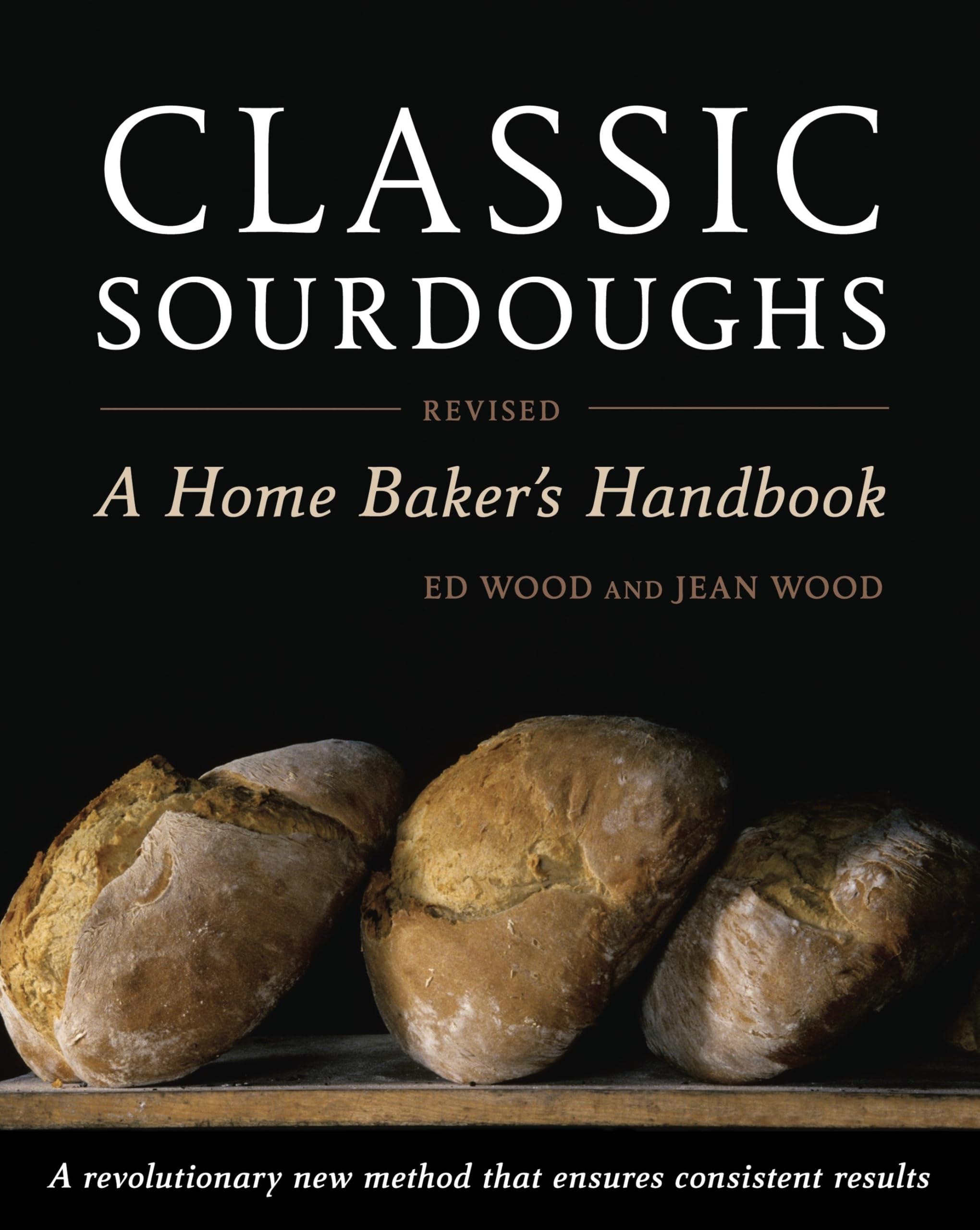
Classic Sourdoughs, Revised: A Home Baker's Handbook [Wood, Ed, Wood, Jean] on desertcart.com. *FREE* shipping on qualifying offers. Classic Sourdoughs, Revised: A Home Baker's Handbook Review: Still my favorite sourdough book! - This is an excellent reference for home bakers who want to understand how to create authentic sourdough breads. It's not complicated and does not require any special equipment. The original edition of this book has long been one of my favorites, and I really like the updated information in the revised edition. One of the biggest improvements is the simplified directions in the chapter "Putting It All Together". In my opinion this is the heart of the book. In just a few pages it explains very clearly what is happening in your sourdough culture and how to handle it correctly. It made me a better baker, and I am having more fun experimenting with recipes and adapting them to my taste. Another great addition is the "No-Knead Sourdough" recipe section. I was intrigued by the simplicity of the basic recipe. It worked beautifully for me. And with a slight adjustment to the loaf proof (lower temperature, longer time) I can now easily fit baking fresh sourdough bread into my weekday work schedule. The recipe worked equally well for rye bread. My favorite recipe section in the book is probably also the most unique - the one on Middle Eastern breads. It's brought to life by the authors' personal experiences from living and traveling in the Middle East. I love making fresh "Khbuz Arabi" (pita bread) when we have guests. They bake in just 5 minutes, the guests love watching them puff up, and they are delicious hot out of the oven. For a perfectly authentic version, and extra food for conversation, you could use the author's "La Giza" culture, collected from an ethnic bakery in Egypt. At the end of the book is a small section that describes the sourdough cultures collected by the authors and available on their website (Sourdoughs International). It does not come across as a pitch but rather as sharing their passion for the history and variety of sourdough cultures. I grew up in Germany on excellent rye and whole grain sourdough breads. Many years ago when I moved to the US and experienced serious bread withdrawal, I got Ed Wood's "New Zealand Culture for rye" and have been baking with it ever since. It makes fantastic rustic rye breads, though I tend to omit the extra ingredients (molasses, milk, and butter) listed in the book's rye recipes. Now Ed Wood has a new Polish rye sourdough culture and I am tempted to try it. Review: Great reference - Multiple recipes with a good description of the bread making process.
| Best Sellers Rank | #506,314 in Books ( See Top 100 in Books ) #141 in Bread Machine Recipes #340 in Organic Cooking #647 in Bread Baking (Books) |
| Customer Reviews | 4.5 4.5 out of 5 stars (700) |
| Dimensions | 7.36 x 0.51 x 9.13 inches |
| Edition | Revised ed. |
| ISBN-10 | 1607740079 |
| ISBN-13 | 978-1607740070 |
| Item Weight | 9 ounces |
| Language | English |
| Print length | 192 pages |
| Publication date | July 12, 2011 |
| Publisher | Ten Speed Press |
M**H
Still my favorite sourdough book!
This is an excellent reference for home bakers who want to understand how to create authentic sourdough breads. It's not complicated and does not require any special equipment. The original edition of this book has long been one of my favorites, and I really like the updated information in the revised edition. One of the biggest improvements is the simplified directions in the chapter "Putting It All Together". In my opinion this is the heart of the book. In just a few pages it explains very clearly what is happening in your sourdough culture and how to handle it correctly. It made me a better baker, and I am having more fun experimenting with recipes and adapting them to my taste. Another great addition is the "No-Knead Sourdough" recipe section. I was intrigued by the simplicity of the basic recipe. It worked beautifully for me. And with a slight adjustment to the loaf proof (lower temperature, longer time) I can now easily fit baking fresh sourdough bread into my weekday work schedule. The recipe worked equally well for rye bread. My favorite recipe section in the book is probably also the most unique - the one on Middle Eastern breads. It's brought to life by the authors' personal experiences from living and traveling in the Middle East. I love making fresh "Khbuz Arabi" (pita bread) when we have guests. They bake in just 5 minutes, the guests love watching them puff up, and they are delicious hot out of the oven. For a perfectly authentic version, and extra food for conversation, you could use the author's "La Giza" culture, collected from an ethnic bakery in Egypt. At the end of the book is a small section that describes the sourdough cultures collected by the authors and available on their website (Sourdoughs International). It does not come across as a pitch but rather as sharing their passion for the history and variety of sourdough cultures. I grew up in Germany on excellent rye and whole grain sourdough breads. Many years ago when I moved to the US and experienced serious bread withdrawal, I got Ed Wood's "New Zealand Culture for rye" and have been baking with it ever since. It makes fantastic rustic rye breads, though I tend to omit the extra ingredients (molasses, milk, and butter) listed in the book's rye recipes. Now Ed Wood has a new Polish rye sourdough culture and I am tempted to try it.
J**I
Great reference
Multiple recipes with a good description of the bread making process.
B**E
Helpful, informative
I wasn't expecting the lovely historical information about sourdough, in the front of the book. That was a nice perk! The amount of recipes (and ease of following them) is fantastic, both for bread and other sourdough items (pretzels, bagels, flatbreads, etc). My only beef with the book is that they swear by (and their recipes are constructed using) a proofing box method for sourdough. It might be the best thing ever, but I'm not going to go buy and build (and find the room somewhere in the kitchen) a proofing box. I'll proof my dough the same way it historically has been- with time and heat, as consistently as possible. It would have been nice for the recipes to not rely on proofing box methods are integral to them....which just means that, as someone without a proofing box, I have to do a little guesswork with these recipes on whether my dough is ready to continue to the next step or not. Otherwise, I find this book very helpful for figuring out what to do with my sourdough starter!
B**K
Excellent cor beginning bakers
Great book, especially for beginning sourdough bakers. Very thorough, with step by step instructions. Lots of great recipes too!
A**R
Great book for those wanting to step into the would of sourdough!
Very useful Book! I'm new to the world of baking and sourdough was a mystery for me. I found this book to be a a very useful guide on growing, maintaining and baking amazing bread with my very own sourdough culture! However i do have to say that now i use this book as more of a guide when baking. I found over the last 6 or so months i've been fine tuning the recipes and processes to suit my culture and my baking environment. My proofing times are quite a bit shorter than those described in the book (which isn't to say they're wrong) i just found my culture is very active and needs less time especially on the second rise. One tip i'd suggest to anyone else who is starting out is to keep notes on things like consistency of the starter culture and then the dough as you're baking. I was stuck a few months ago when all of a sudden my finished loaves where crap. They wouldn't spring anymore in the oven and they turned out very flat and unimpressive. I managed (through trial and error ) to work out that my starter culture wasn't hydrated enough in combination with a longer than needed have second rise. This book is great if you want a very in depth explanation of the whole process.. I have to say i was a little overwhelmed after watching all the different ways to do it on youtube or in forums. This book can be a little daunting at first. but once you understand the principals outlined in the book its really quite easy and fun! These days i've started to rely more on judging the consistency of my starter culture (keeping it like a thick pancake mixture or a thick milkshake) and then judging when the starter is fully activated. Proofing time varies for me now depending on what the dough looks and feels like rather than strict times and measurements. By doing this i am able to recreate great loaves every time now :) and now i'm like "why was i ever hesitant to get into sourdough?!" :) Highly recommend this book for anyone with little or no experience in baking bread! Its really not that hard to start doing it!
C**N
Dit boek beschrijft zuurdesem klaar en duidelijk. En er zijn ook handige recepten om brood te bakken.
S**.
I haven’t tried the recipes yet but there is so much information about sourdough baking. The recipes look really good too. Ones that I would actually like to make. I have bought several other books on sourdough in the past but this is the so much better. A great book for the new sourdough enthusiasts.
L**.
I was looking for something really specific in a breadmaking book - sourdough breads which work within a timescale that suits me. Most sourdough recipes which I'd already seen either took 36 hours to make (thus finish at awkward times), or suggest using refrigeration to retard the dough to a timescale that suits you (Peter Reinhart's Artisan Bread Everyday is classic for using refrigeration). I'm a student, living in halls with others, and have absolutely zero room in a refrigerator to retard dough. Which is why this book is great. The vast majority of breads in this book are designed to have an overnight (12 hour) rise, unrefridgerated. It is possible to play around with the timings further - warm water if you want it done in 10-11 hours - cold milk, cold eggs if you want the first proof to be finished in about 16 hours (unrefridgerated). Then shape and proof at room temperature for another 3-4 hours(ish)before baking. For me, this system is perfect. Due to the slow rising properties of sourdough, the worry that your dough will overproof if you take your eye off it for 15 minutes is practically non-existant - IMHO, you get about an hour's leeway as to when you have to stick it in the oven. Due the the long slow rising times, the doughs are amazing and flavourful (and the very wet ones are really extensible). In my opinion, the long slow rising process also allows for good gluten development without the need for a huge amount of kneading (I tend to do the Dan Lepard kneading method on all loaves, just because it's so much easier than doing a continuous 15-20 minute hand knead. I know purists frown upon this method, and there is some argument to suggest that thorough kneading is necessary in order to oxgenate the dough. But I've been getting pretty good results using this method, and the dough does windowpane after it's third knead). Downsides? IMHO, the cooking times given in this book are not long enough (but the oven I use is very unreliable, so it's probably just me. I've had a few loaves which appear perfectly cooked until you get to the middle, which was almost raw). The only abject failures I've had with this book was when I used a sourdough starter which had not been recently refreshed (i.e it was 2 days since it had been refreshed. With this book, it works best if your starter is really recently refreshed - 3-6 hours. Due to the slow rising, a recently refreshed starter is a must, since an old starter will result in a very acidic and gummy textured loaf.) Also, there's no pictures. So long as you have prior experience making sourdoughs, this book is great (this book doesn't really give any general breadmaking guidance, it's just recipes).
M**N
My first and forever guide to make sourdough from sctrach for an Indian guy like me who has never tasted a sourdough bread from outside. Great recipes.
R**O
Mais um grande livro sobre panificação.
Trustpilot
Hace 3 semanas
Hace 5 días